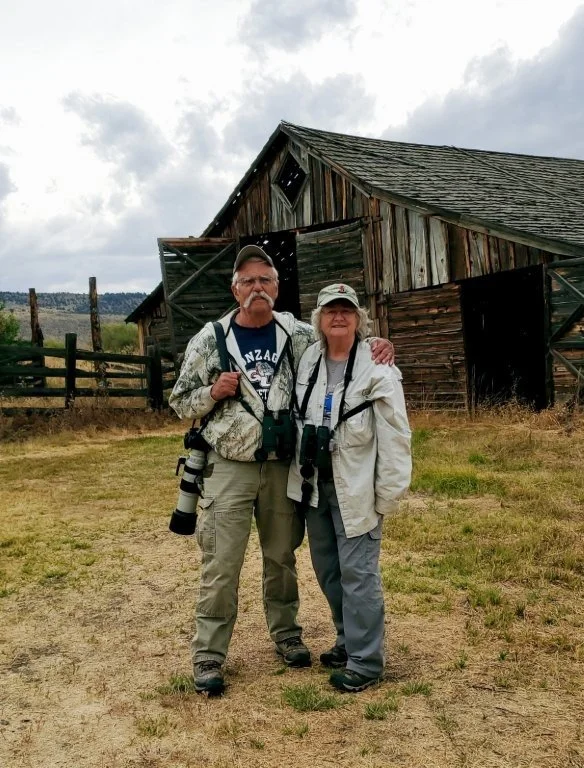
Buck and Sandy Domitrovich birding at Malheur
Sandy and Buck Domitrovich
By Madonna Luers
Sandy and Buck Domitrovich haven’t been able to convince any of their three children to run around the countryside looking for birds. But they’re passing down their passion by encouraging their seven grandchildren and three great grandchildren to enjoy the birds and other wildlife at Turnbull National Wildlife Refuge near where they live.
Spokane Audubon Society (SAS) members for over 20 years, the Domitrovichs became birders for life when they went on their first organized birding trip to Glacier National Park in Montana with Road Scholar, the non-profit educational outdoor travel program.
Buck loves to photograph all wild creatures and his photos are often featured in the Spokesman-Review and grace the SAS calendar. Sandy says they joined the chapter to learn more about birds, where to go, when to look for different birds, and what habitat to look for specific birds.
“We wanted to meet people with like interests who would assist and encourage us to become better birders,” she said.
They helped revive the Cheney Christmas Bird Count with former Turnbull employees Mike Rule and Sandy Rancourt, chapter president Alan McCoy, and others. Buck has made birding presentations on Costa Rica for SAS and on birding in general for the Friends of Turnbull organization, which they also support.
Both Sandy and Buck were born in 1943, he in Bremerton, Washington, she in Anaconda, Montana. They met in Anaconda where she worked as a car hop (think “Happy Days” for those old enough to remember that TV show!) and stole his heart while delivering his hambuger and milk shake. They were married 10 months later, August 8, 1964.
Buck had followed his father and uncles in the pipefitter trade on the smelter in Anaconda. Sandy recalls that when the smelter was shut down in 1981, it was devastating to the whole community.
“It was a very difficult time,” she said, “as we had to decide where we should move and what direction our lives should go.”
Hanford nuclear reservation, as it was called then, needed pipefitters and so five Anaconda families all moved to Richland, Washington. But the Domitrovichs were looking for a better community “fit” and Buck found a position as a plumber at Eastern Washington University (EWU) in Cheney. Sandy found a position in the EWU education department, earned a Bachelor of Arts degree, and worked as a program coordinator for the graduate program until retirement.
They have two sons, Pat and Shawn, and daughter Robin. The family’s “extracurricular” activity, at least until their boys graduated high school, was a shooting program they started. Buck was a registered rifle/pistol coach so he obtained permission to use the Reserve Officers Training Corps (ROTC) rifle range at the university. Both boys are hunters to this day, Shawn here in the local area, Pat in Alaska where both his dad and brother have joined him in hunting forays, including caribou, mountain goat, and even musk ox.
The Domitrovichs have birded many places beyond eastern Washington. Malheur National Wildlife Refuge in eastern Oregon is one of their favorites for finding Burrowing Owls, White Faced Ibises, and many migrating warblers. They’ve also made many trips to the Oregon coast to see waterbirds.
They’ve made several trips to Alaska, including a boating trip out of Seward where they saw Tufted and Horned Puffins and Black-legged Kittywakes. At their son’s home in Seward they saw a beautiful Townsend Warbler. In the Kenai area they saw American and Pacific Golden Plovers.
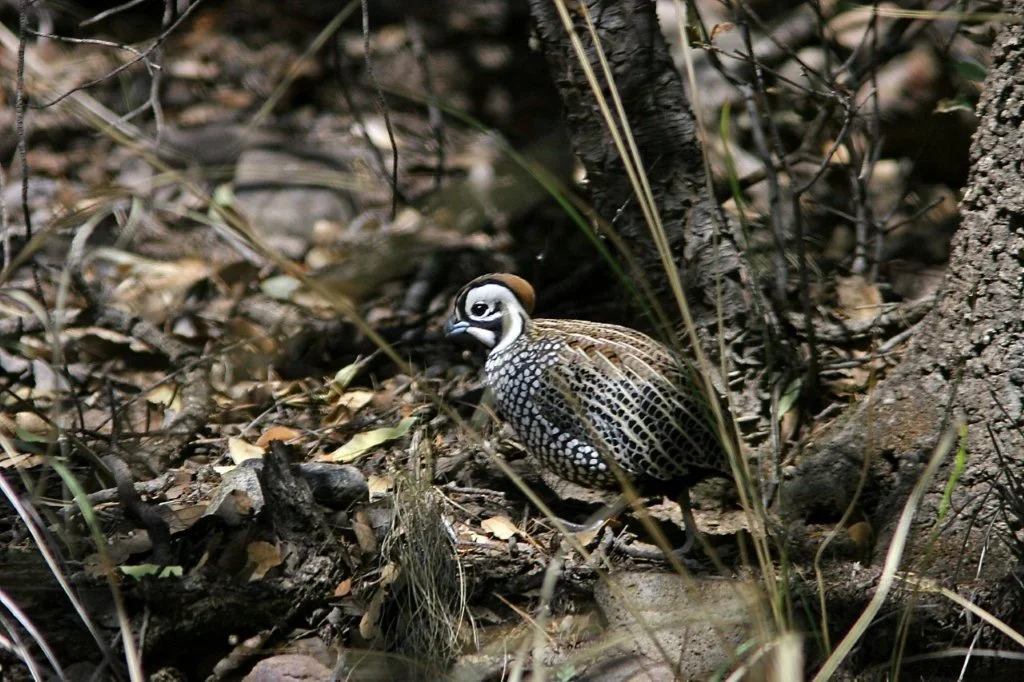
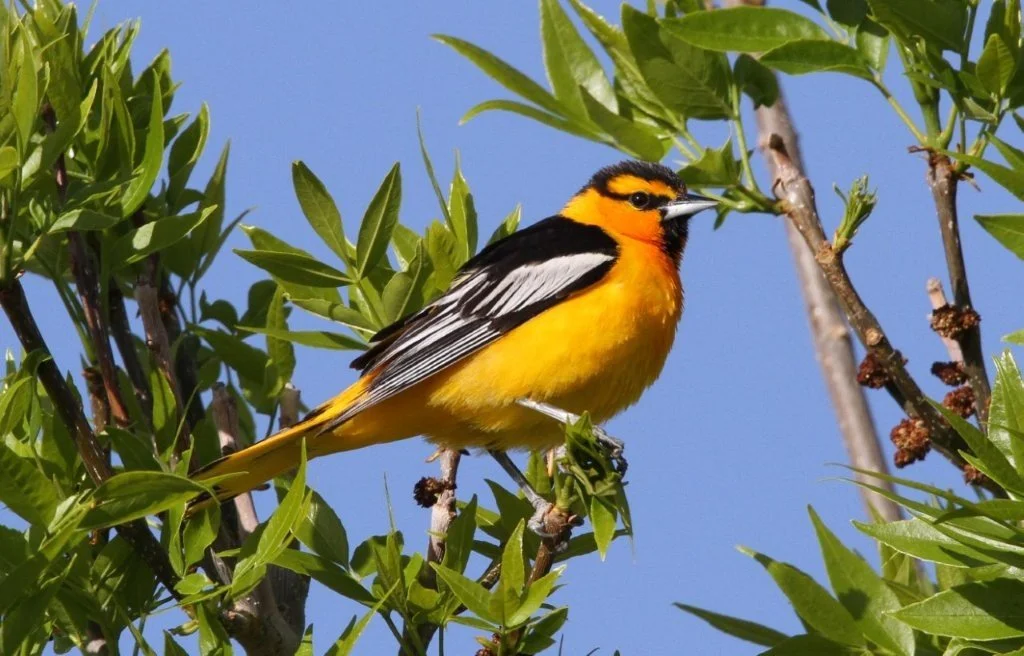
Arizona is another favorite. In Sierra Vista, known as the hummingbird capital of the U.S., they found 13 “life birds” in one day, including Magnificient and Broad-billed hummingbirds, Scaled Quail and Pyrrhuloxia. In the Tucson area they enjoyed Greater Roadrunners and five Oriole species -- Altamira, Bullock’s, Baltimore, Hooded, and Scott’s. They saw the elusive Montezuma Quail in the Cave Creek area when their guide spotted it while driving their tour van. At Sky Island they added two life birds, Hepatic Tanager and the Little Gull, which their guides were very excited to see as it wasn’t supposed to be in Arizona. They also saw lots of Acorn, Arizona, Gila, and Ladder-backed woodpeckers.
One East Coast trip to Cape May provided them views of thousands of Red Knots, American Oystercatchers, Indigo Buntings, American Woodcock, and even a “surprise” Northern Gannet.
“If you want to see new birds, you travel to them,” Sandy said. One April they weathered the warmth of Texas to obtain permission to bird on the King Ranch with a special guide. There they found the Ferruginous Pygmy Owl, which Sandy recalls looked a lot like our Northern Pygmy Owl. Other birds on the ranch or in the surrounding area were: Aplomado Falcon, Scaled Quail, Black-throated Green Warbler, Green Jay, Rose-breasted Grosbeak, Least Bittern, and Black Skimmer.
They joined fellow SAS member Kim Thorburn on her birding trip to her native California and recommend it highly if she offers it again. “She found us a Clapper Rail within an hour after picking us up at the airport,” Sandy recalls. “She also found us many Acorn Woodpeckers which was our ‘target bird’ for the trip.”
Sandy’s favorite guided trip was to Costa Rica where she doubled her life list from over 300 to over 600 birds, including five species of toucans (Black-mandibles, Keel-billed, Emerald, Yellow-eared, and Collared Aracari), Wood Stork, Golden-winged Warbler, Spangle-cheeked Tanager, and many hummingbirds (including Volcano, Scintillant, White-throated, Bue-throated Mountain-gem, Violet-headed, Rufous-tailed.)
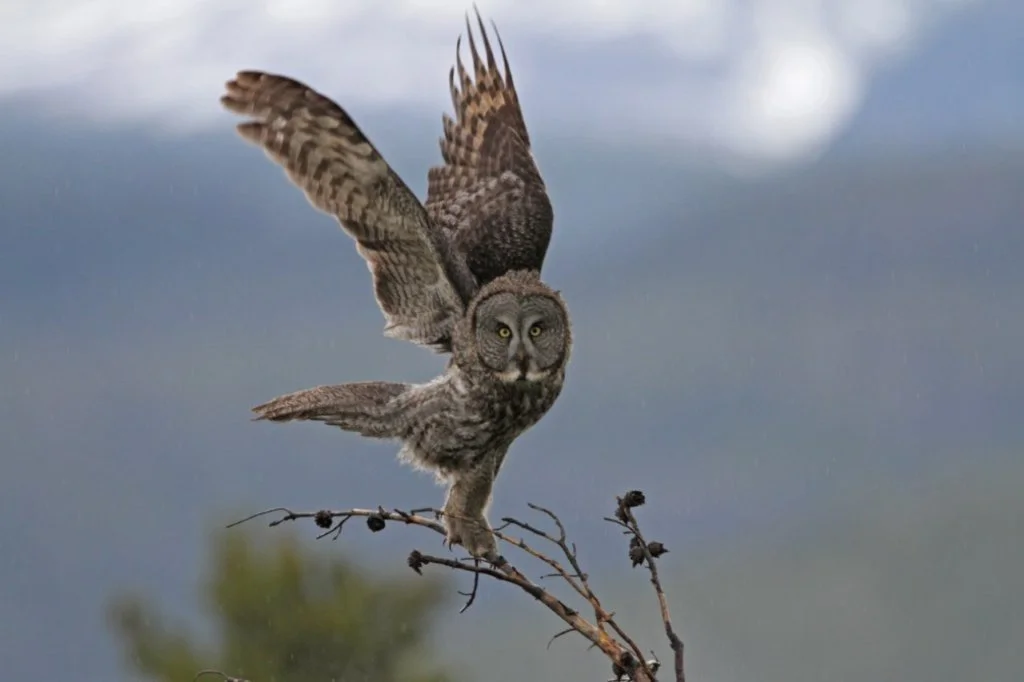
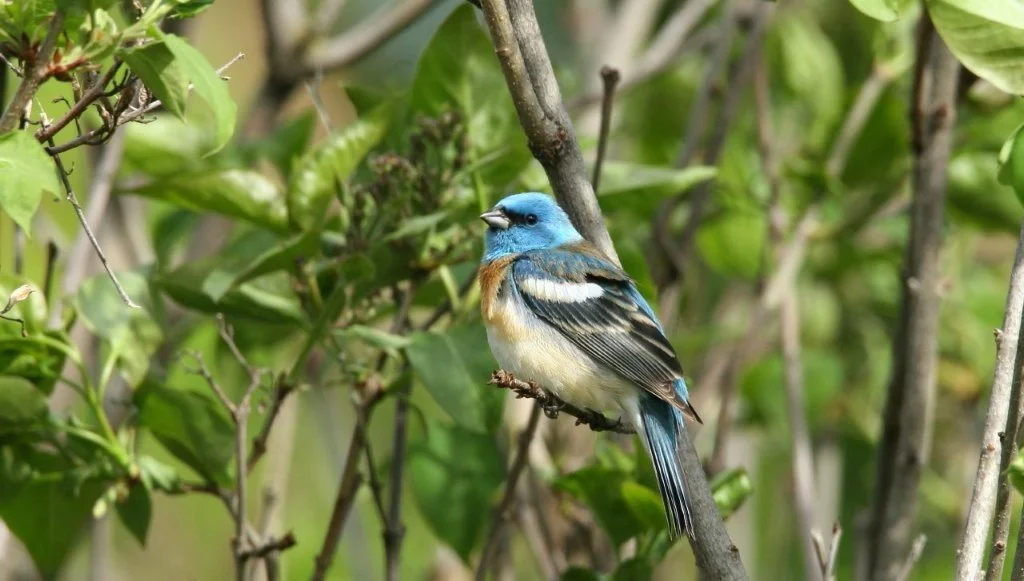
Neither Sandy nor Buck claim to have a favorite bird, although both love the Great Gray Owl, which they’ve seen more than 15 times, especially in the Georgetown Lake area of Montana. Buck favors “the one I’m looking at,” and tends to photograph raptors and woodpeckers in general. Sandy likes finding the smaller birds, like warblers and hummingbirds, favors the Lazuli Bunting, and “would love to have a better look at the Painted Bunting.”
The Domitrovichs’ advice for beginning birders is to get a Sibley Field Guide to Birds of Western North America, get the most expensive binoculars you can afford, join the Spokane Audubon Society, and sign up for birding trips to learn from others.
They also hope new generations of birders, including their grandchildren and great-grandchildren, will join in efforts to address the greatest threats to birds -- loss of habitat and pesticides use.
“We always had our family in the outdoors as they were growing up,” Sandy said. “If you want the next generations to take care of the planet, introduce them at an early age to the wonders of the outdoors.”


