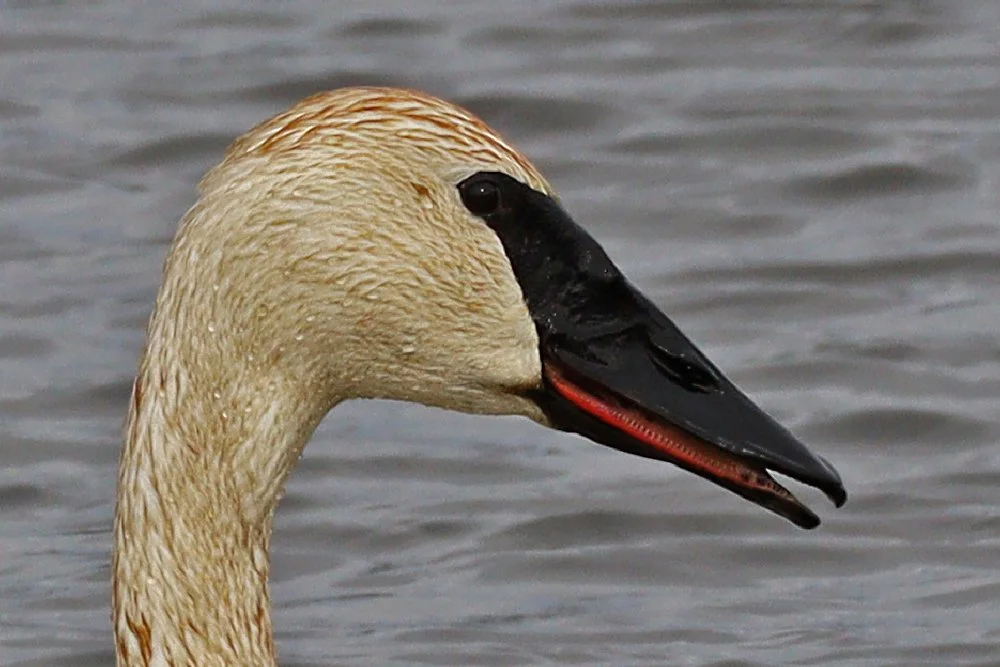
In March, as I walked down the Pine Lake Loop path I began to see spring activity increasing at Turnbull. On Winslow pool, I saw a pair of Trumpeter Swans dipping their long necks into the water to consume the aquatic plants, roots and tubers. They do not have teeth but they possess hard, plastic-like serrated ridges along the edges of their beaks called lamellae, which function like teeth to grip vegetation, filter food and tear aquatic plants. They also have jagged structures on their tongues called "barbs" or conical papillae made of cartilage (similar to the rough tongues of cats!).
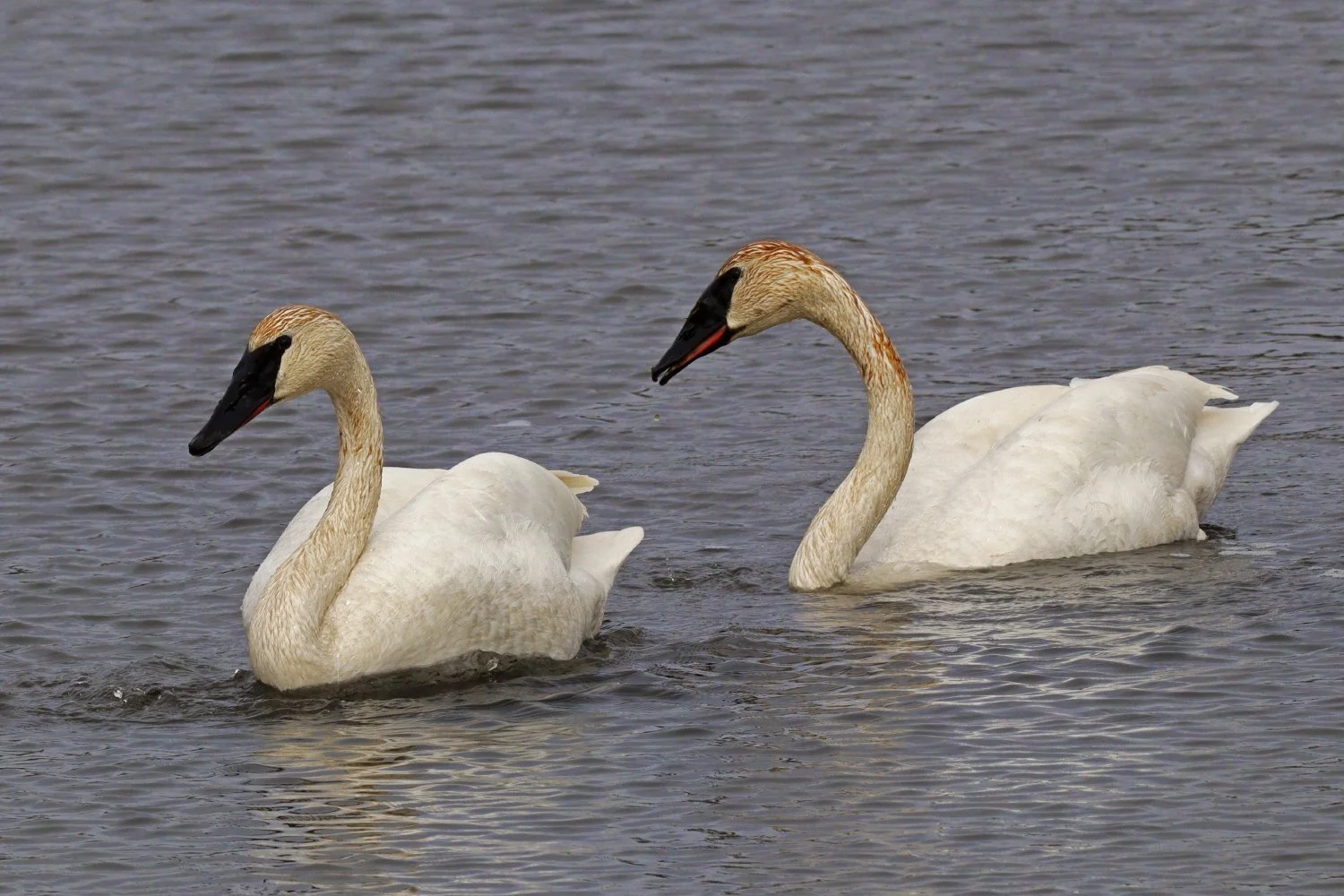
Trumpeter Swans
As I continued my walk, I heard and then saw a Red-winged Blackbird showing off: perched with its feathers fluffed out and tail partly spread, lifting the leading edge of his wing so that the red shoulder patches were really prominent as it sang in hopes of catching the attention of female mates.
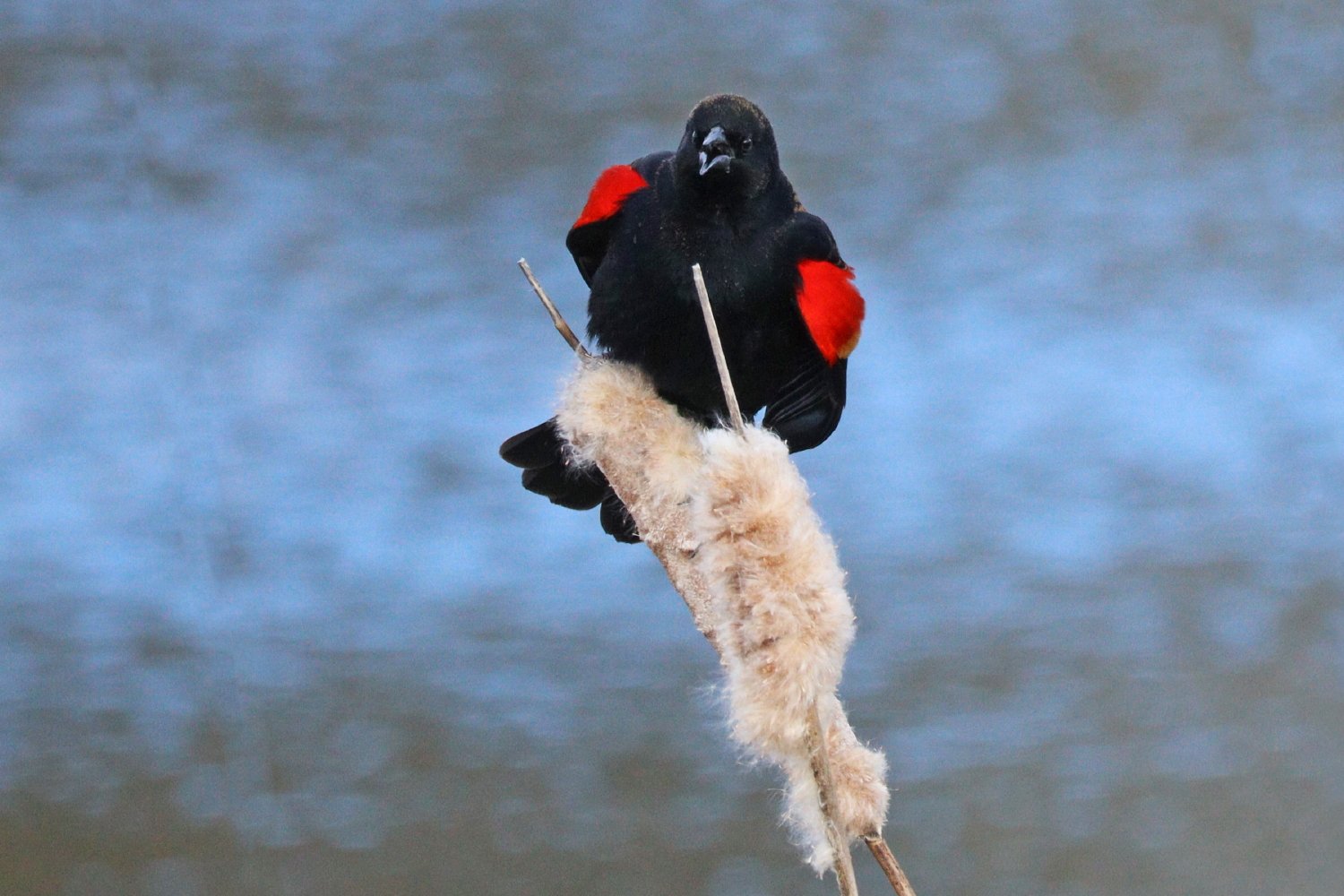
Red-winged Blackbird
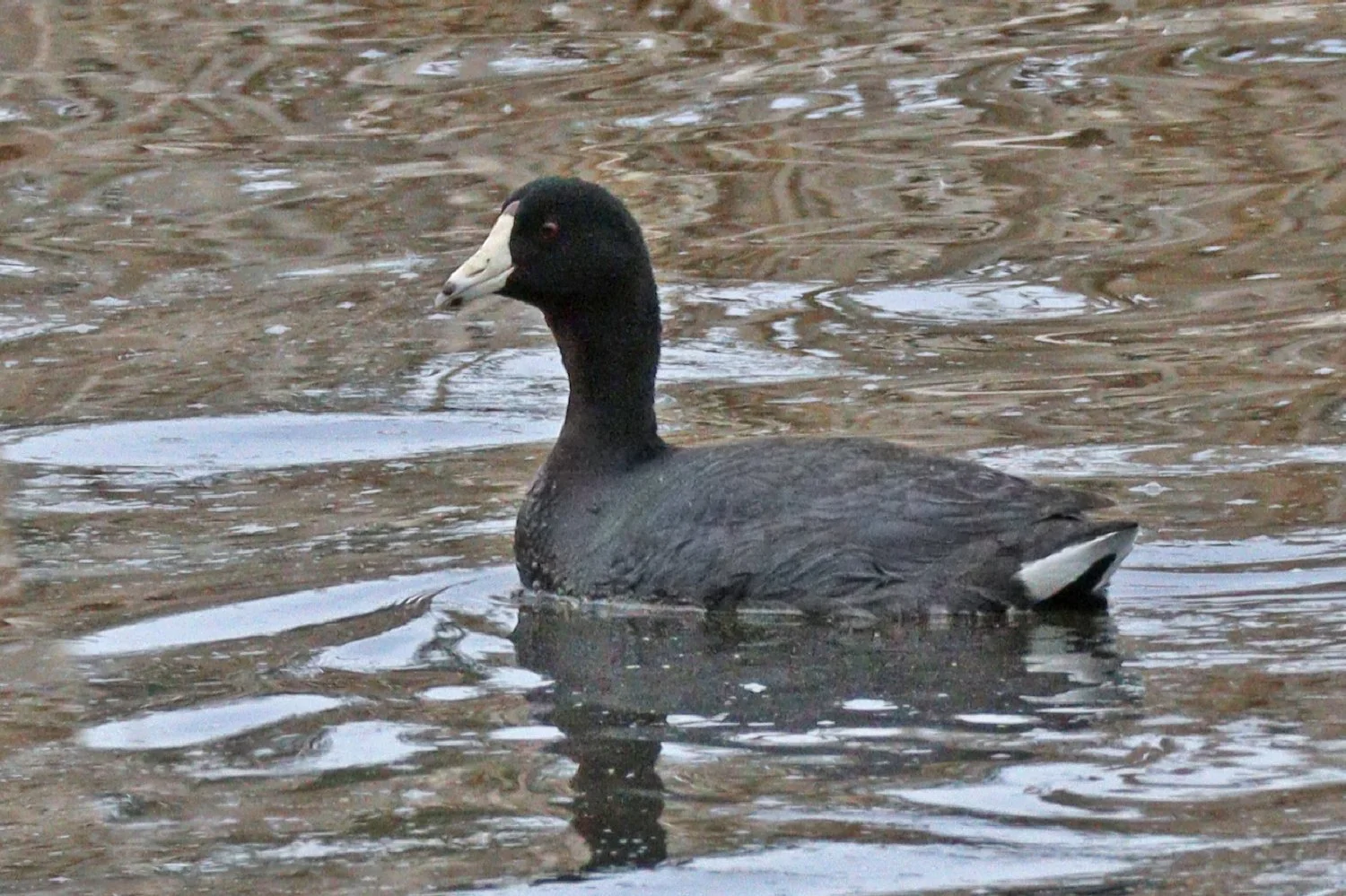
Quite a distance away, I spotted my first American Coot of the season. This time I noticed that at the back of its bill was a strange, fleshy reddish-brown bump. Turns out it's part of the white “frontal shield” of tough material from the back of its beak to its forehead. Situated between the eyes at the top of the bill, this mark is a normal part of their anatomy and often becomes more pronounced or swells during the breeding season to assist with mate selection and it is also assumed to be a shield for protection during aggressive encounters with other coots. The two dark marks on the upper and lower tip of a Coot's bill are just natural pigmentation, typically looking like a small black or dark-brown ring near the tip.
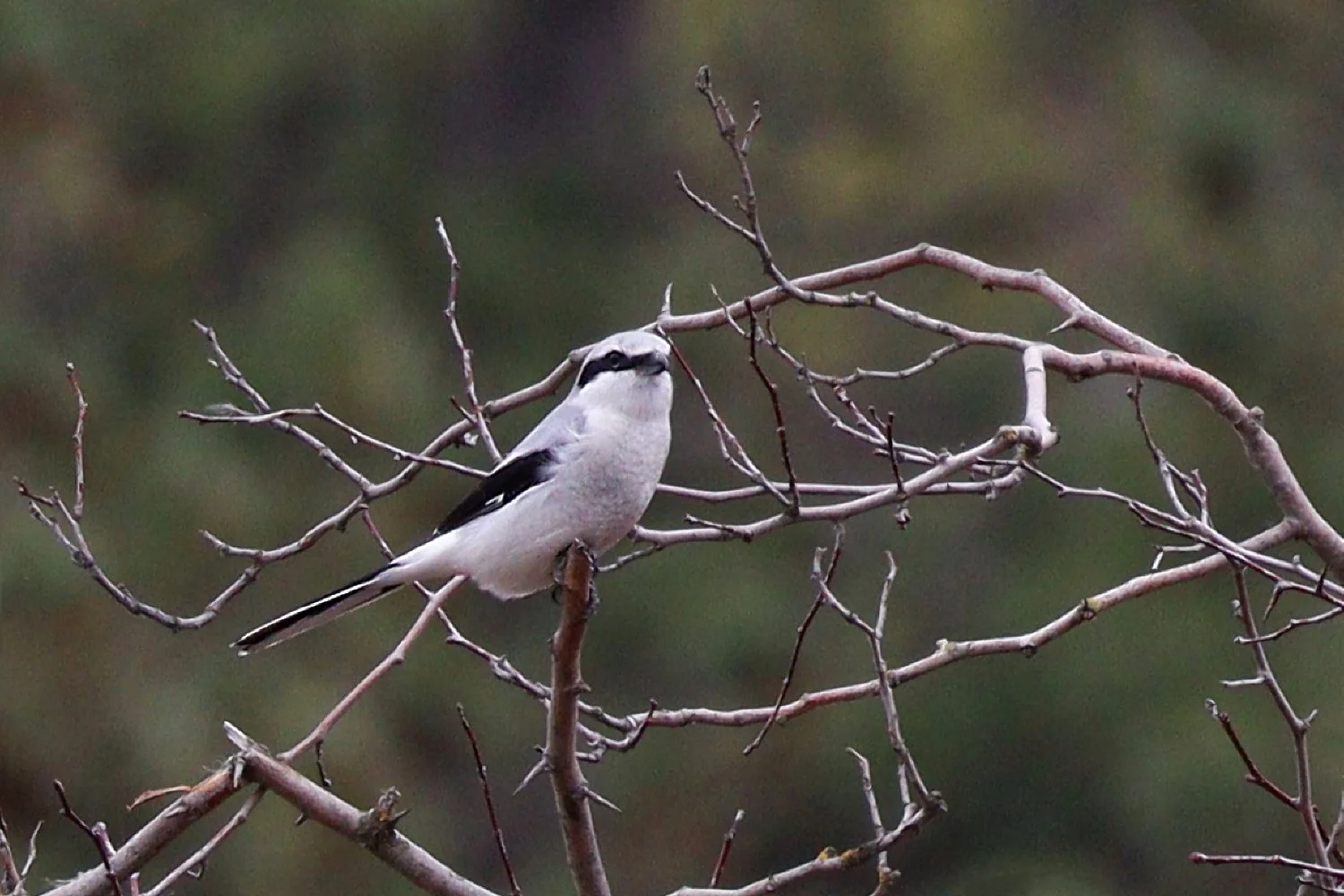
High on a branch I spotted a Northern Shrike which surprisingly - for a 9" long bird - eats smaller birds like sparrows, small mammals (like mice), and insects. Its bold black mask and stout, hooked bill heighten the impression of danger in this fierce predator. It was perched high to survey for prey.
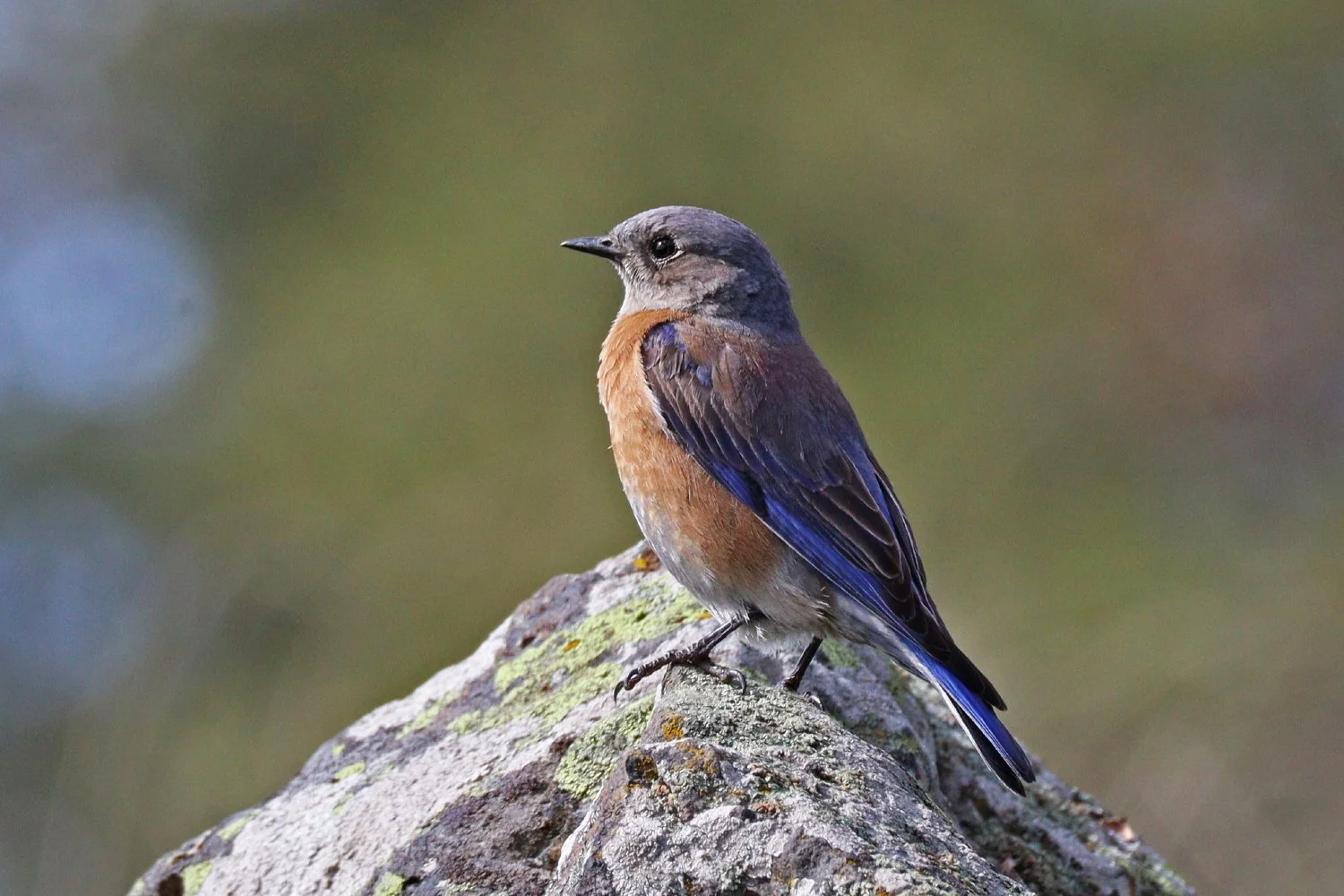
As I was walking back to the car, I saw this beautiful Western Bluebird just chilling a rock. It looked like it was posing for me! Bluebirds are typically seen as a symbol for happiness. Well, it put a smile on my face as I took its lovely picture. Did you know that there are actually no blue pigments in bluebird feathers? Their color comes from the design of their feathers that scatter only blue light ("Tyndall scattering"). Supposedly, no "blue" birds have actual blue pigmentation!
"My favorite weather is bird chirping weather.” —Terri Gullemets
Carlene Hardt


