Bird Observations for April 2020 (in order seen)
Alan McCoy, South Spokane County, Open Ponderosa Pine habitat
4/1:
American Robin plentiful and noisy
Northern Flicker tapping and calling constantly
European Starling eating suet until I chased them off
Western Bluebird a couple pairs investigating my bluebird boxes – nest building but no eggs as of 4/21
House Finch singing constantly and gorging on sunflower seed
Dark-eyed Junco mostly Oregon race, eating at my ground feeder, and trilling while sitting in pines
Red-breasted Nuthatch calling every day though not visiting my feeders as much now
California Quail visiting feeders and hiding in my wildlife piles and in my Caragana hedge
Western Meadowlark a wonderful spring voice and early nester in nearby fields
American Goldfinch abundant, developing full breeding color, loves niger and sunflower seed
Mountain Chickadee summer breeder singing every day (but the Black-capped has left my yard for the summer)
Eurasian Collared-Dove every day visitor to my ground feeder
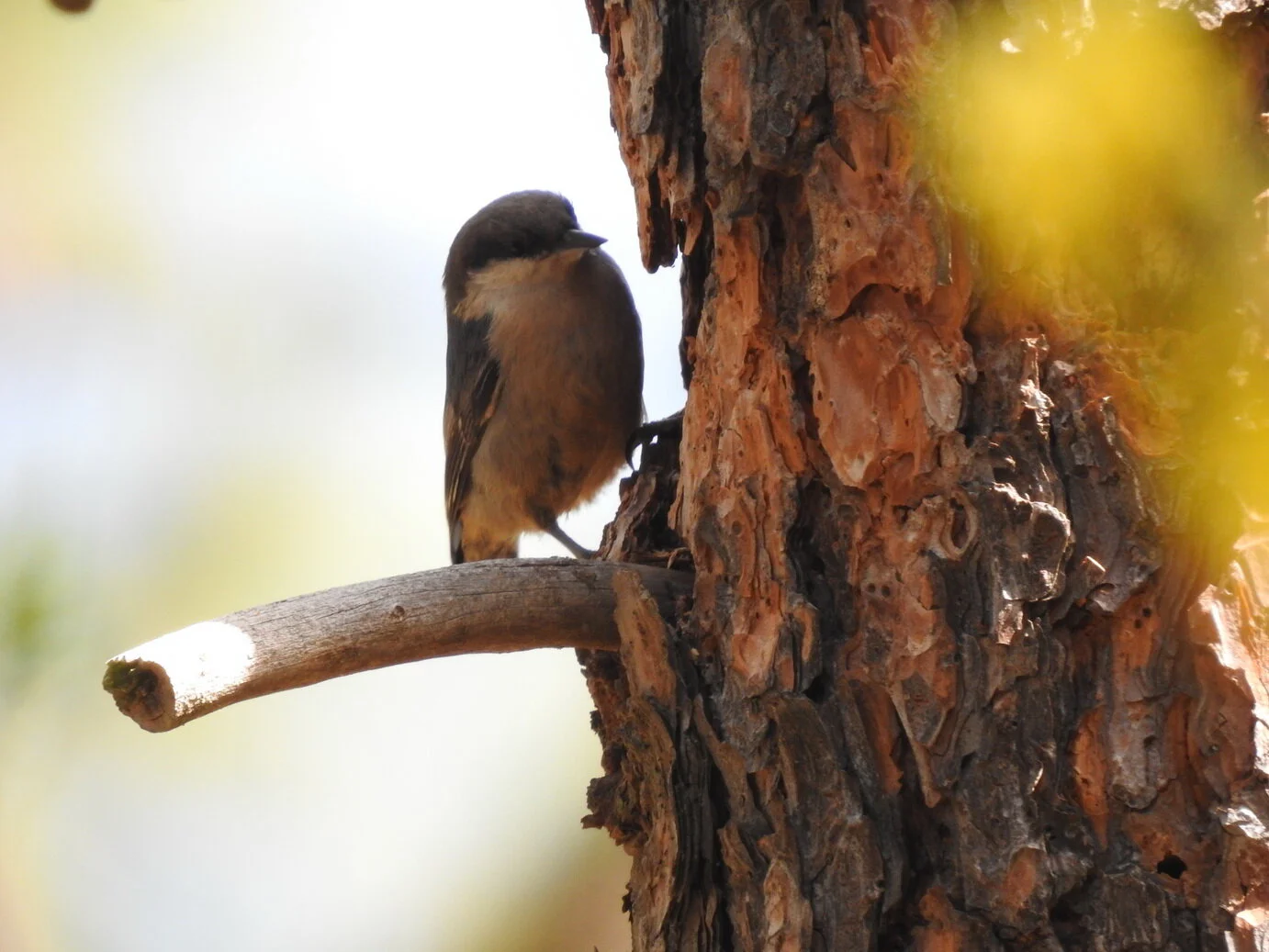
Pygmy Nuthatch year round friend now busy excavating a nearby snag, same snag as last year
Mourning Dove not as constant the first week, now every day at my ground feeder
Hairy Woodpecker visiting my suet doesn’t hang around as much as Downy but may breed here
4/2:
Downy Woodpecker daily visitor to my suet
Red-tailed hawk – seen most days hovering and today resting on a snag not far from my shop
Common Raven – heard and seen most every day, clicking and squawking and calling
4/3:
House Sparrow comes to my ground feeder, tries to nest in one of my bluebird boxes but I chase them away until they leave for good
Brewer’s Blackbird – a short flyover on this day and often seen on wires across the road
Red-winged Blackbird sometimes come to my ground feeder, male and female
4/4:
Canada Goose flyover not daily as last month but still common
4/6:
Killdeer nesting in fields all around
4/10:
Gull species – 4 heard at first and then finally found them flying and soaring very high overhead. The voice sounded much closer than they actually were. Also a Red-tail soaring close to them.
Hummingbird feeder - I put out one feeder but as of 4/22 I haven’t had any hummers visit
4/17:
Tree Swallow I hope they will nest in one of the bluebird boxes like they did last year
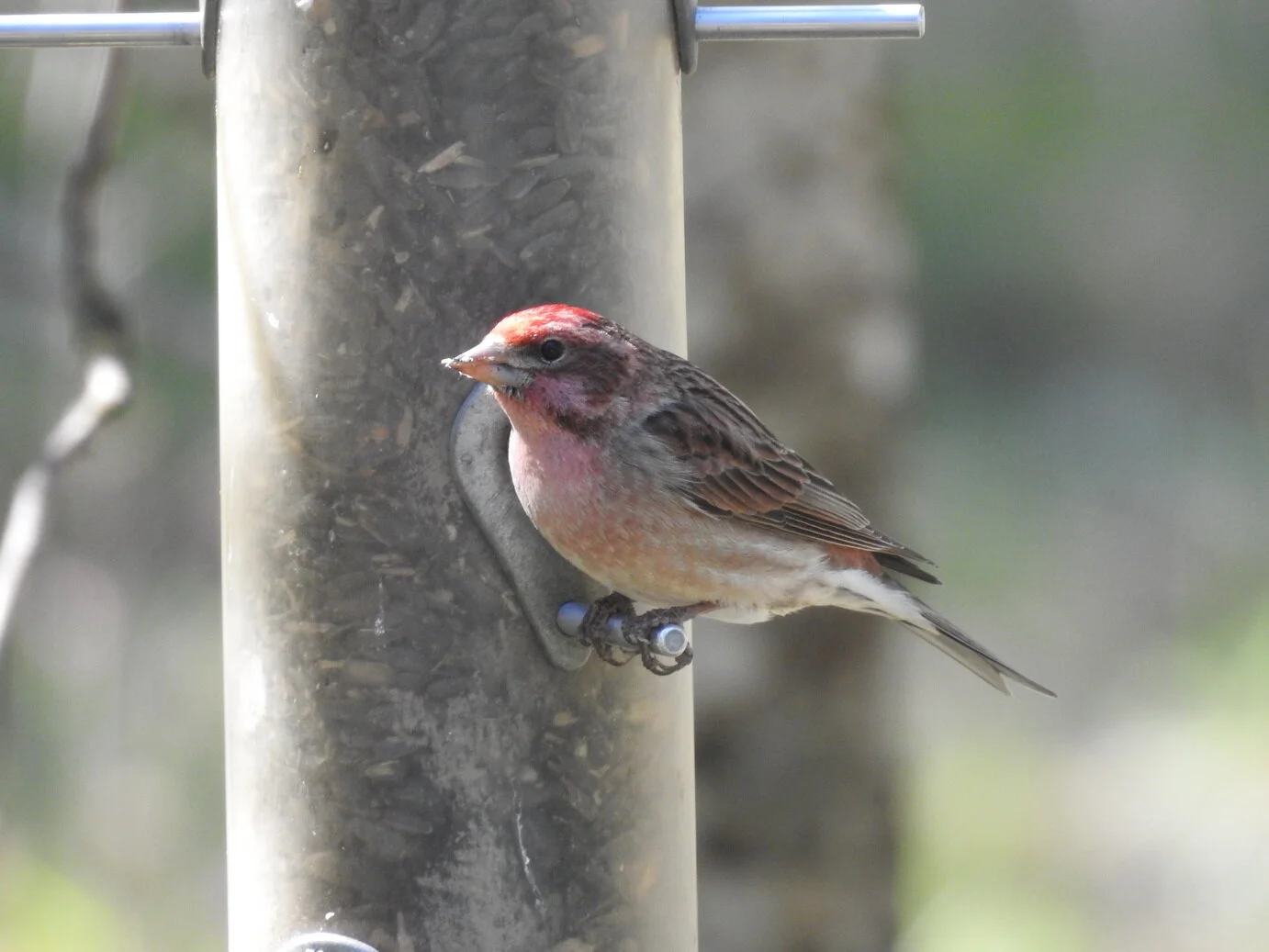
Cassin’s Finch – brilliant male munching black-oil sunflower seeds sharing space with goldfinches and house finches
4/18:
Yellow-rumped Warbler (Audubon) male in breeding plumage, heard them first and then finally located one high in a pine
Ruby-crowned Kinglet a pair finding bugs to eat in our Forsythia. Male with brilliant ruby crown and singing its lovely song
4/19:
Say’s Phoebe finally heard its plaintiff call (had heard it in mid-March on my morning walks, but not at home)
4/20:
Cooper’s Hawk – male flying and soaring not far above my head,