
October 8, 2025 Spokane Audubon Society (SAS) meeting
6 – 7:30 p.m.
Spokane Audubon Society’s (SAS) October 8 meeting at Shadle Park Library, 2111 W. Wellesley Ave. in northwest Spokane, will feature a presentation on Birding the Texas Gulf Coast. Meeting room door opens at 5:45 for a little social time before the program begins. If you can’t attend in person, it can be enjoyed from home on-line via Zoom. Join Zoom Meeting.
Meeting ID: 837 8819 8783 Passcode: 658265
Birding the Texas Gulf Coast
Presented by Bea Harrison, SAS board member
Birding the Texas Gulf Coast can be magical. Its 367 miles are mostly publicly owned, making it very accessible. Over 380 species of birds have been documented at Padre Island National Seashore alone. Various Christmas Bird Counts have reported hundreds of additional species across different regions, with Matagorda County recording 232 species on a single count.
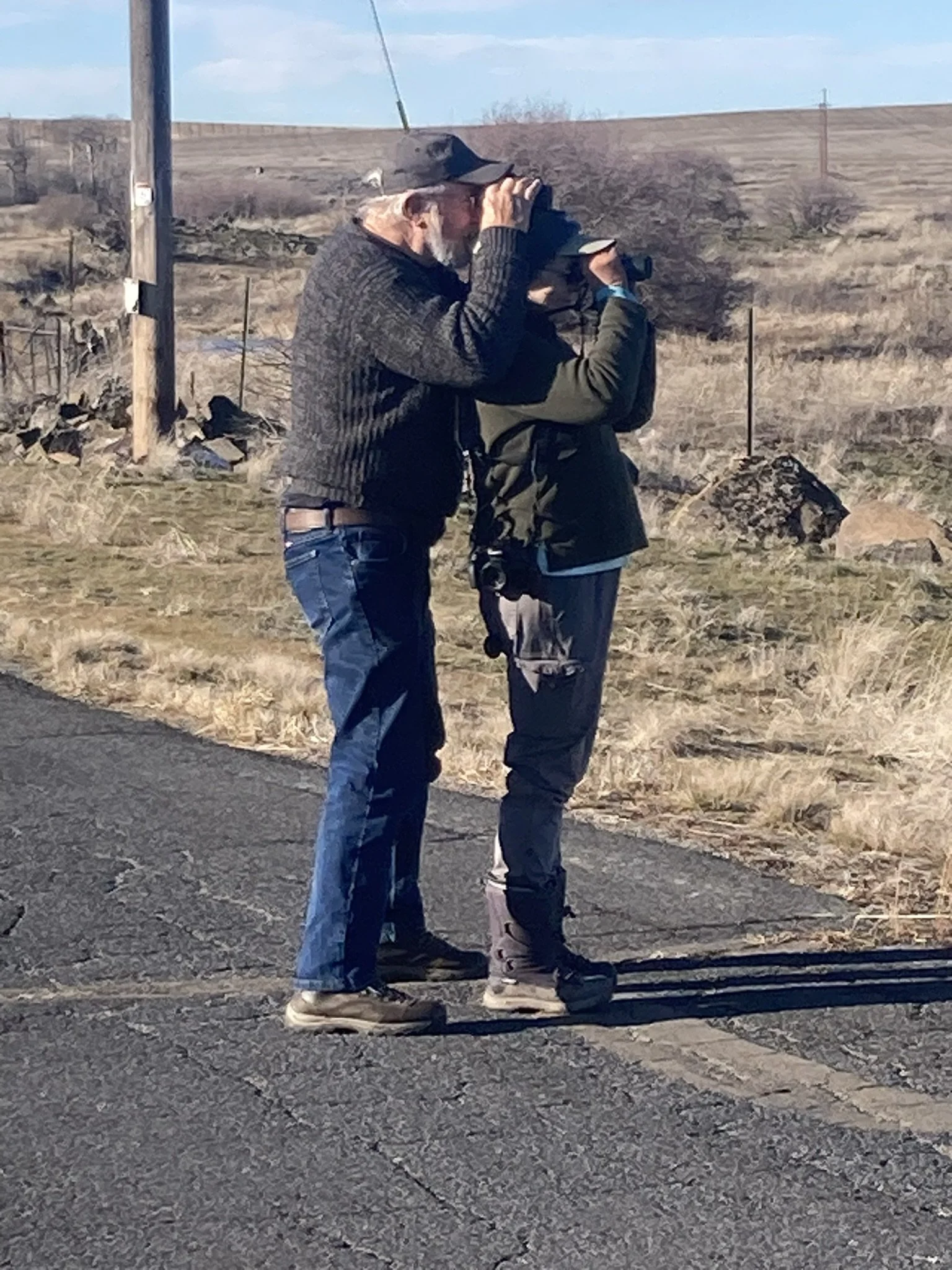
Jim and Bea birding
Bea and her husband Jim, who both serve on the SAS board and chair the chapter’s field trip committee, grew up in Texas and have been birding for 40 years. They worked for The Nature Conservancy and have had seasonal jobs and volunteered for many conservation organizations, such as bird banding for Smithsonian Institute on the Texas Coast; counting birds at Hawk Watch International at Smith Point; leading bird tours for Texas Parks and Wildlife, Gulf Coast Bird Observatory, and San Bernard National Wildlife Refuge. They lived within five miles of that refuge for many years and raised their son there. They spent many hours patrolling the refuge’s auto tour loop where they could see over 50 species in an hour on any given trip, making San Bernard one of their favorite birding destinations.

Jim pouring over a map of Brazos Bend State Park
Bea will talk about and show photos from San Bernard and four other great Texas Gulf Coast birding spots:
• Brazos Bend State Park lies within the Brazos River floodplain and is designed with birdwatching in mind. The river levies afford an elevated walkway above old river meanders, now lakes, making some of the best riparian habitat in southeast Texas. The waterfowl and wading birds have become accustomed to hikers, making for outstanding photography opportunities. Warblers and other passerines are commonly observed, along with many alligators, making it one of the best places in Texas for alligator watching.
• Quintana Neotropical Bird Sanctuary, near Freeport, Texas may be in a heavily industrialized area but this small wooded lot near the beach is a migrant magnet. Created by a collaboration led by the Gulf Coast Bird Observatory in Lake Jackson, thousands of visitors from around the world know this spot is special.
• Matagorda County and specifically the mouth of the Colorado River, where it flows into the Gulf of Mexico, always has an abundance of shorebirds any time of year, but especially in spring and fall. This is a good place to camp or rent a house or cabin and spend a few days. There are miles of beaches and roadside wetlands to explore and good places to grab a seafood lunch.
• Leonabelle Turnbull Birding Sanctuary in Port Aransas, Texas, has wonderful boardwalks built over the water where you can get close-up looks at all types of ducks and wading birds such as white and white-faced ibis, black-necked stilts, American avocets, dowitchers, sandpipers, and an occasional American flamingo. The woodland area can hold Orchard and Baltimore orioles, migrating indigo, painted and blue buntings, and many warblers that stop over in spring and fall migration.
Bea and Jim have continued their nature interpretation work and volunteering since moving out west, including at Washington State Parks’ Cape Disappointment, Haystack Rock in Oregon, Washington Department of Natural Resources’ Cypress Island, and Turnbull National Wildlife Refuge.. But the Texas Gulf Coast is special to them.
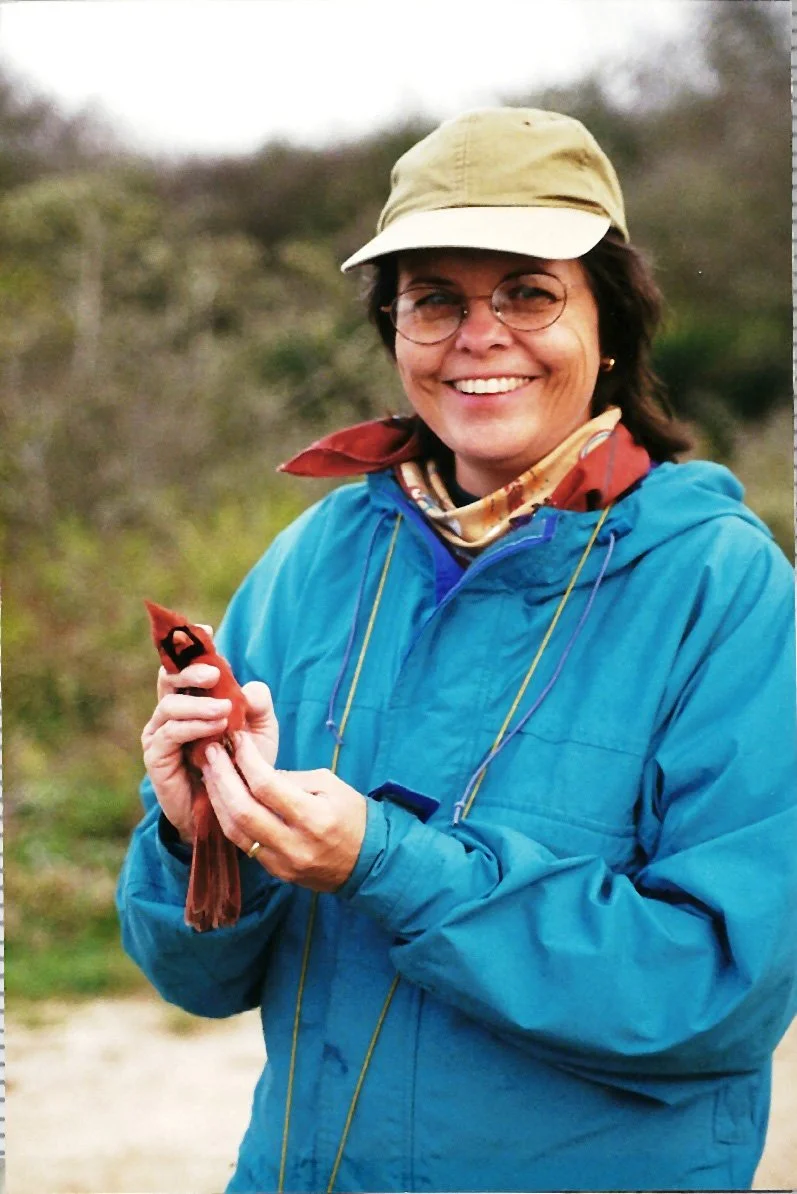
Banding a northern cardinal
“There’s a reason people come from all over the world to bird the Texas coast, “ Bea said.


