By Joyce Alonso
Herons in a city park?!
Bird lovers everywhere are intrigued by avian life cycles, courting habits, but especially by their efforts to reproduce and continue their species. We are charmed by the tiny nests of hummingbirds, impressed by the orioles’ weaving skill…but what of the larger birds?
This spring a pair of Great Blue Herons set out to create a family. Where to build a nest? Location, location, location! Humans who frequent Manito Park were surprised to see a pair at work 50 feet up in a towering ponderosa pine on the west end of Mirror Pond. In about a month’s time the shallow platform nest held five chicks, which the parents provisioned with fish from the handy pond below. Rejected and dropped fish and parts littered the grass below.
Despite parental efforts, all was not well in the Great Blue nest. Two of the five young fell or were pushed from the nest, suffering broken legs in the fall. Great Blue Heron chicks may accidentally fall from the nest as they move around, grow, and develop their wings. Additionally, if they are not getting enough food or if there is overcrowding in the nest, some chicks may be pushed out by their siblings.
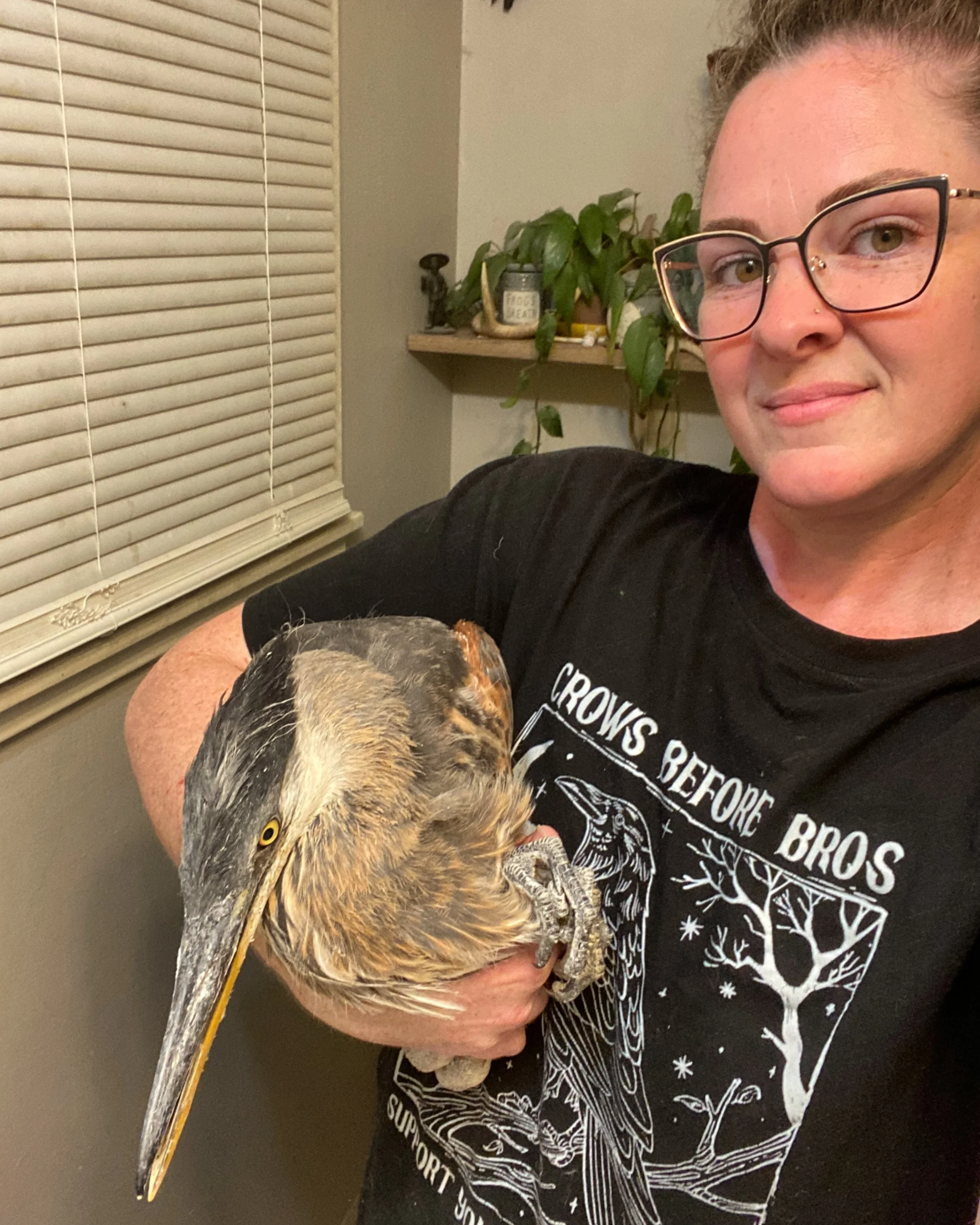
A member of the public found one of the heron chicks dead on the ground below the nest. Spokane Audubon’s Save-A-Bird Team was notified of the plight of the second bird on the ground, and a team member arrived to find it in poor condition, too thin and too weak to stand or to offer much resistance to being handled. This bird was transported to the Wildlife Ward of Washington State University’s Veterinary Clinic in Pullman, where the veterinarian determined it had severe injuries that would prevent it from being able to survive in the wild. Sadly, the bird had to be euthanized.
The Washington Department of Fish and Wildlife’s Eastern Region office in Spokane Valley forwards requests for help from citizens who find birds in distress, to the Save-a-Bird team. Team volunteers monitor a dedicated email account and respond to these inquiries. They may simply provide advice to the reporting party, or they may physically capture and transport a bird to a partnering local veterinarian for stabilizing treatment or humane euthanasia. Sometimes this may mean a long drive to WSU’s Wildlife Ward in Pullman.
As of this writing, the other heron nestlings at Manito Park remain high up in the tree, their nest having disintegrated on one of our recent blustery days. Members of the Save-A-Bird team have been visiting the park periodically to check on them. Their future…?? Fingers crossed…maybe toes too!
If you would like to volunteer with the Save-A-Bird team, use this link to go to the volunteer page on our website: https://www.audubonspokane.org/volunteer. A team member will contact you as soon as possible. Training and mentoring are available.


