

It was a perfect day in late July for a couple of self-proclaimed naturalists to be out in the field. While dry, the day’s weather was temperate enough to be comfortable for our task and to enjoy plenty of wildlife activity. It was in our spirit of wondrous pleasure that we happened upon our discovery.
Our task, while important to our project, was disagreeable. Mary and I were recovering a GPS unit collar from a dead sharp-tailed grouse hen. The bird had been imported from British Columbia clear cuts three months earlier as part of an effort to restore a small Eastern Washington population teetering on extinction. When marked birds succumb, project participants make intense efforts to reclaim the costly equipment to ensure that only the bird is wasted.
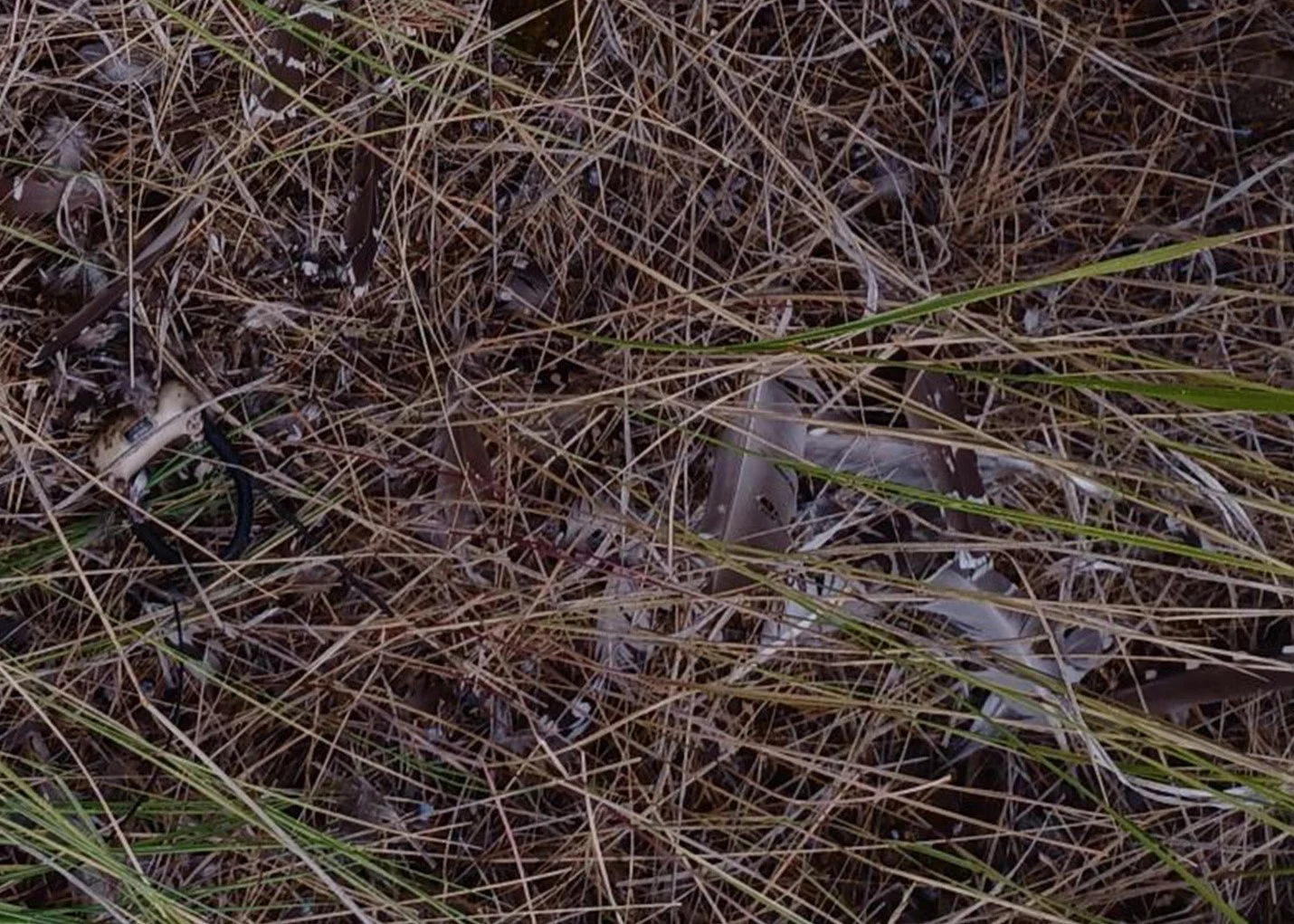
The GPS had accurately signaled the coordinates where it lay under the only living (and non-resident) western juniper on the edge of meadow-covered Palouse hill. It sat among a few scattered plucked feathers but no other remains. The scene signaled death by an avian predator, most likely a great horned owl, that had yanked off the head and carried the carcass elsewhere for consumption.
Task completed, we trudged through the channeled scabland shrub-steppe to return to our rig. We called out the birds that flushed and stared back admiringly at the big mule deer buck in velvet. We noted the growth of sagebrush and other vegetation five years after a destructive wildland fire had burned through. We ogled late-blooming flowers and some plants we didn’t recognize. We remarked about the fire resistance of shin-bruising rigid sagebrush untouched on its soil-less basalt outcrops.
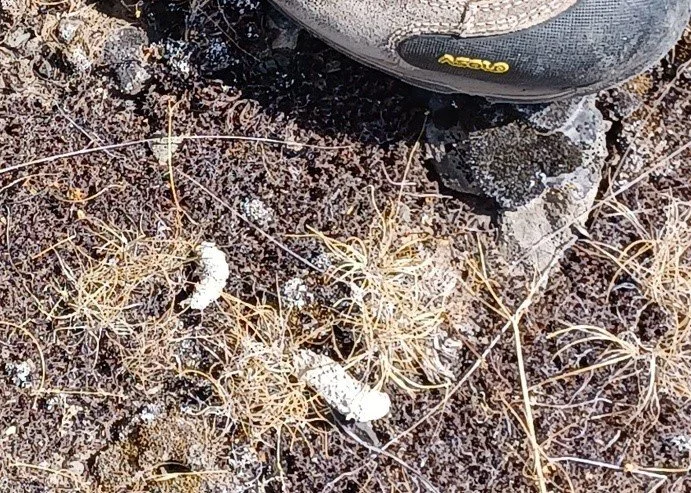
It was on one of these rigid sagebrush patches that we made our discovery. Scat pellets! The first we saw were a half to three-quarters inch-long, rounded-end, oblong vegetation-containing poops. We stopped short. With grouse on our minds, we both gasped, “Sage-grouse.” That bird hadn’t been seen in the area since an attempted re-introduction failed with the loss of the last surviving rooster two years earlier. Our project retained hope, though. We chased reported sightings and searched far and wide during mating season.
The pellets were old and dry but still intact. We began finding more. We figured the age would be compatible with spring-season droppings sitting on a basalt outcrop through a few very dry months. It was just the kind of place the sage-grouse like to dance.
We ecstatically found more and more scat, imagining the joy of sharing the good news with our project partners and counting the months in our heads until we would be able to watch the late winter display unfold. Our first thought was feathers. Could we find any? That quest proved in vain.
Small doubts began to intrude our naturalist bliss. As we continued our search, some of the pellets seemed quite large. Where were the roost piles that are a constant on lek dancing grounds? It didn’t seem too conflicting that the pellets had no pungent odor of sagebrush, given the aging. Cecal tar also vanishes quickly with weathering. Nonetheless with exhilaration fading, we looked up and surveyed our surroundings.
There was not a big sagebrush in sight. There were stands of basin wildrye. Sage hens will sometimes nest in the large grass, but greater sage-grouse will not lek on a spot that doesn’t have sagebrush for nesting close by.
We were, however, about half a kilometer from a large year-round pond. A sheepish feeling came over us. Some naturalists! We most certainly had come upon a springtime goose hangout. Deflated, we plodded back to the rig. There was still time to seek some other naturalist treasure.


