

June 23, 2025
By Liz Melville Photos by Liz Melville and Alan McCoy
"You should sit in nature for twenty minutes a day, unless you are too busy, then you should sit for an hour." Words of wisdom sent from Emily Burr, Alan McCoy's daughter.
It was Sunday afternoon, the NBA final was about to start, and I made a quick decision:
"I am going to Slavin, I want to see where the Keeney fire burned. I will be back in about an hour. Maybe two."
If my partner Ben was hoping to have company while he watched the basketball game, he didn't say so. He knew I was more interested in birds and trees than basketball, so he wished me luck.
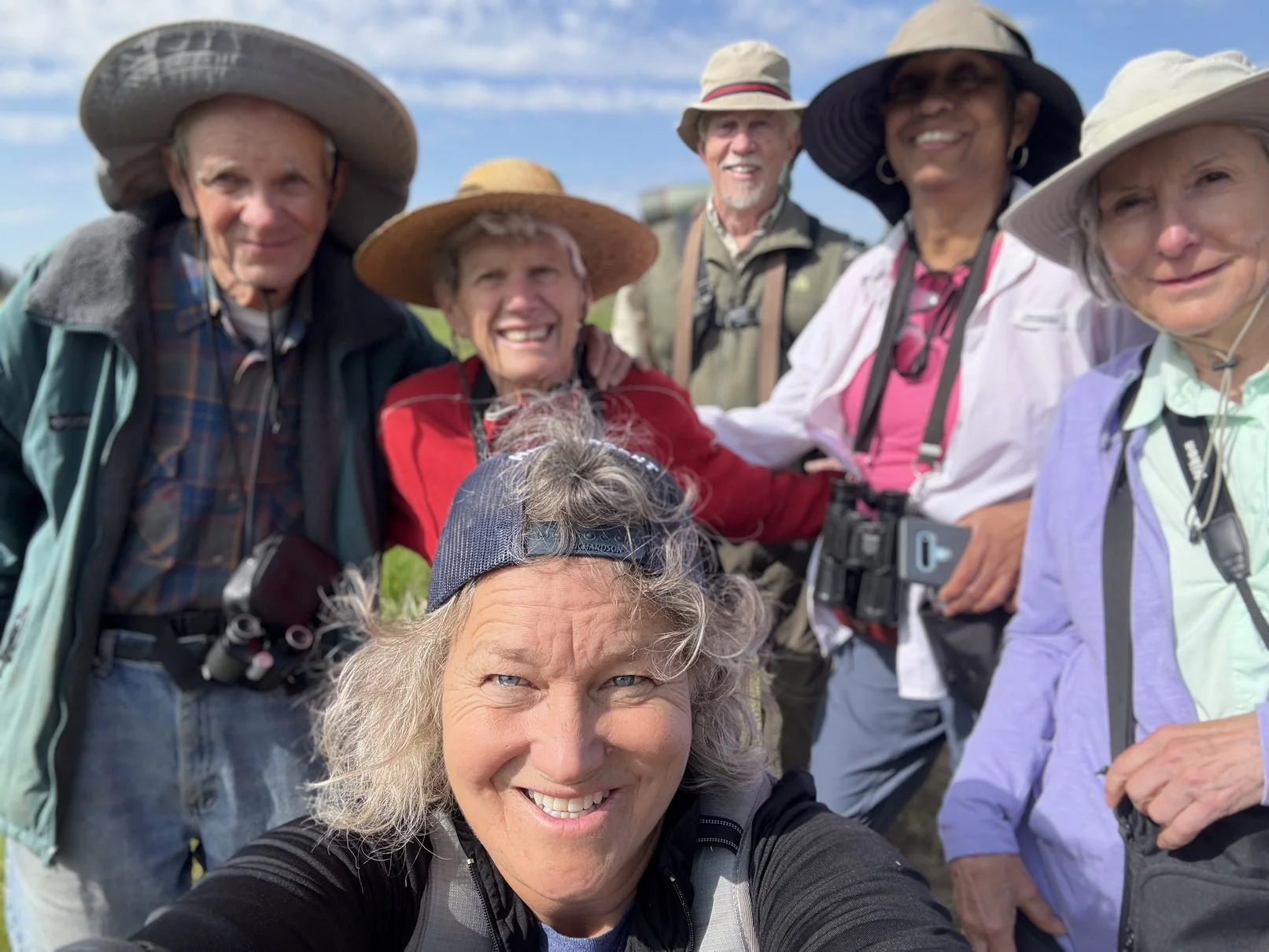
Just the previous week, I had my first experience as a hike docent for Inland Northwest Land Conservancy (INLC) at the James T. Slavin Conservation Area. I wore the official docent shirt, hat, and badge that I hoped would make me look qualified. But I knew that even with this fancy gear, I was not the official leader of the hike. I knew that the reason six people had signed up for this 6:30 AM hike was that Alan McCoy, the president of the Spokane Audubon Society (SAS), had agreed to join us and give us birding lessons.
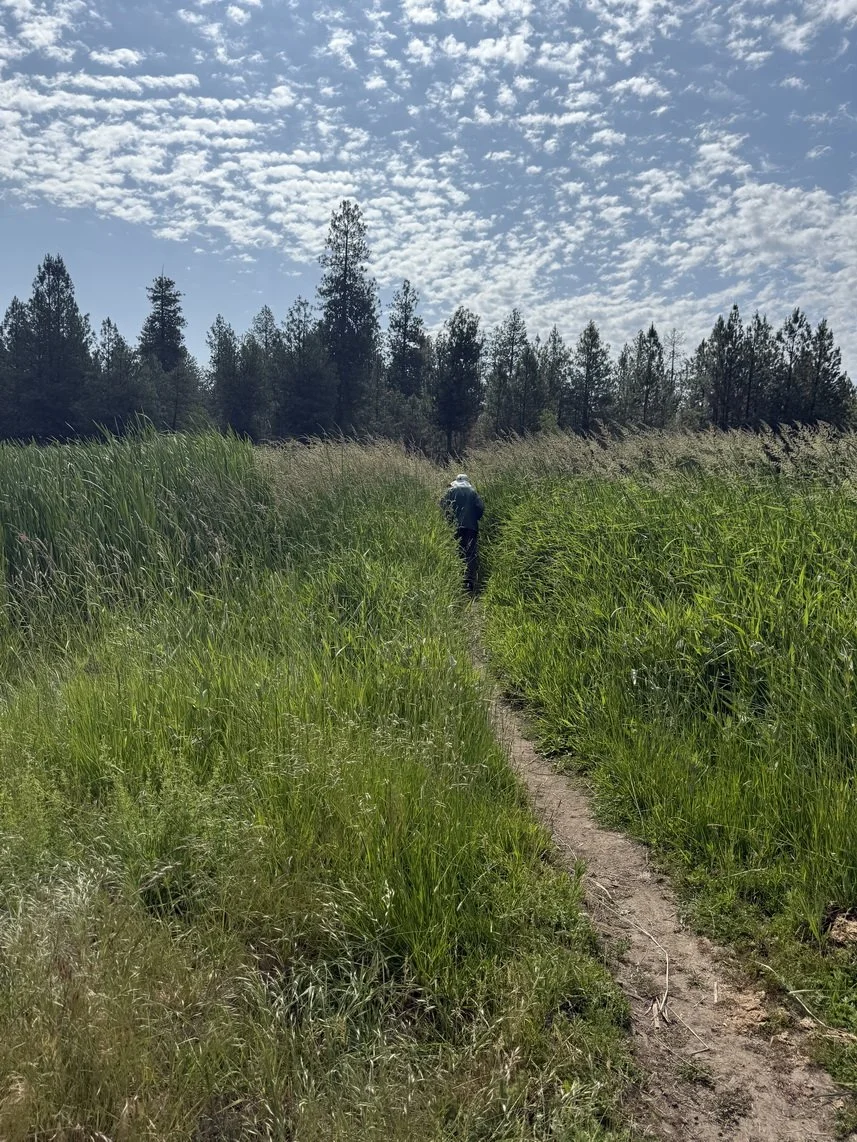
The group met in the parking lot, where I checked off the attendance sheet, organized a quick meet-and-greet, and said, "Well, we might as well get going." But as I started to walk down the trail, Alan pointed out a small flock of Savannah Sparrows that were taking high, playful hops on the trail in front of us.
From this vantage point, not more than 50 yards from our cars, Alan also pointed out an Eastern Kingbird that was perched in a small tree off to our right. I had seen pictures of this black and white robin-sized bird, but had never seen one up close. If I had been alone, I might have missed both the Savannah Sparrows and the Eastern Kingbird.
As we walked down the trail, most of the people in the group had their phones out with their Merlin apps open. They, like me, use the app to identify birds by the sounds they make. A few of the bird calls that showed up on my Merlin app from this day include: Western Wood-Pewee, House Finch, Brown-headed Cowbird, Savannah Sparrow, Common Raven, Eastern Kingbird, Common Yellowthroat, Black-headed Grosbeak, House Sparrow, Cedar Waxwing, Yellow-headed Blackbird, Marsh Wren, Red-winged Blackbird, Song Sparrow, Tree Swallow, Pied-billed Grebe, American Goldfinch, Yellow Warbler, Chipping Sparrow, Northern House Wren, Red Crossbill, American Robin, Gray Catbird, and Red-tailed Hawk. I am sure the list would have been longer, but I kept turning the app on and off to preserve my battery.
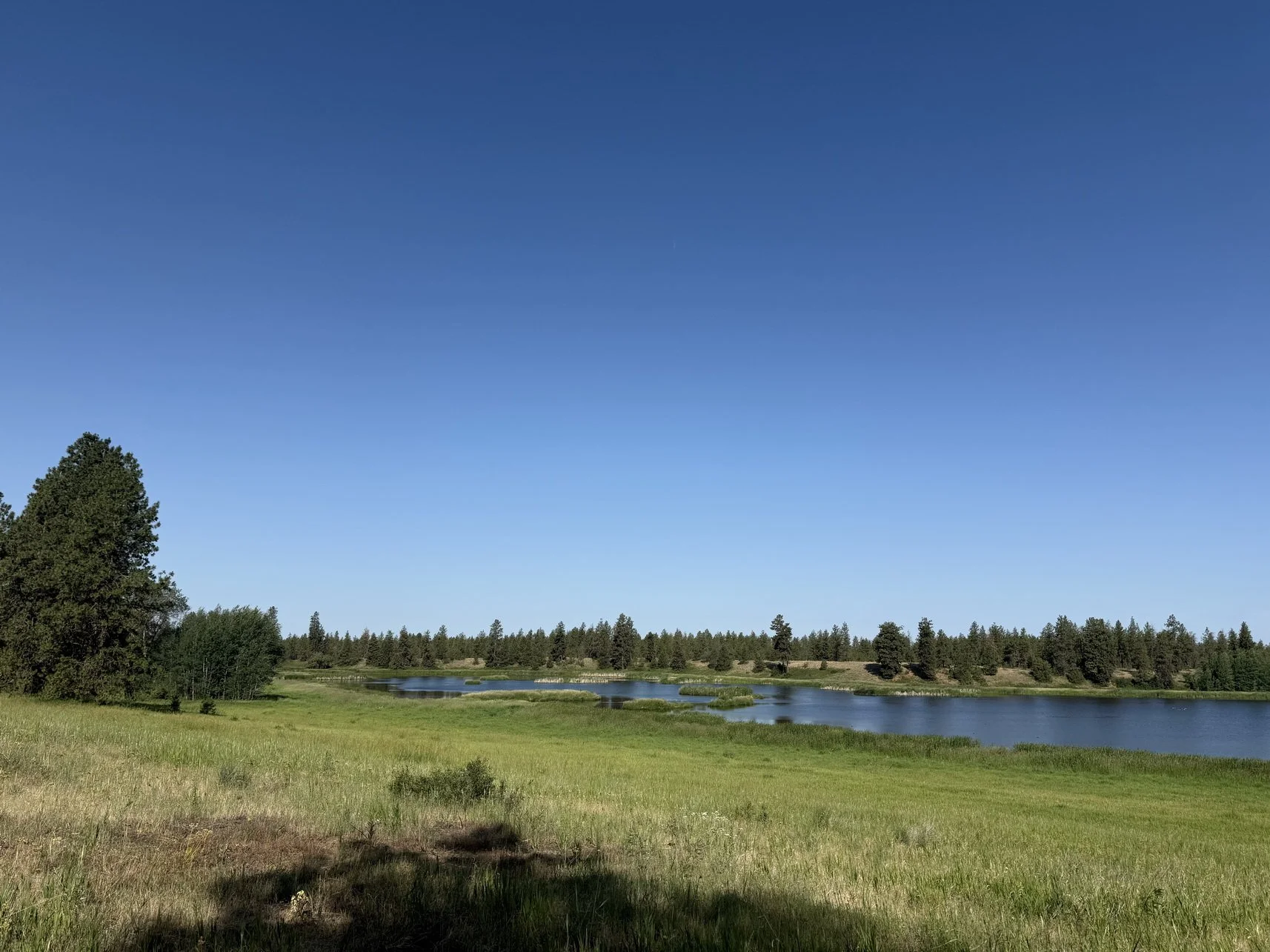
After we meandered slowly through the woods, we gathered on top of a viewing hill that looked out over Slavin's wetlands and small lakes. Here, Alan set up his spotting scope so we could get a good look at a group of ducks on the lake. We saw a Ring-necked duck (a duck that doesn't have rings around its neck), Ruddy Ducks, sporting their upright tails and bright baby-blue beaks, and a Cormorant who shyly hid her face under her wing, but later glided smoothly across the lake, almost skimming the water.
If someone were to want to create stunning, fantastical creatures for a science fiction story, they couldn't do better than this.
Now though, I was all alone with just my Merlin app, a pair of binoculars, and a mission to see the damage from the fire. But as it was a lovely day, I decided to take the long way around to the Southeast corner of the property, where I had been told the fire had burned.
As I began walking across the fields, swallows danced above me. They would swoop up and down, dart right and left, and then sail effortlessly through the air. They are the acrobats of the sky, the kind of bird I would want to be if I could be a bird.
When I came to the viewing spot where Alan had set out his scope just a few days before, I again saw Ruddy Ducks, Ring-necked ducks, Mallards, and American Coots coasting on the water. I did not stay long, though. I had already been gone for well over an hour.
I hurried down the hill and started across the open field towards a stand of Quaking Aspen, but took a moment to look back where I had come from. From this vantage point, I spotted a large woodpecker on the side of a dead tree. I got out my binoculars and took a better look. A Northern Flicker was feeding babies in a hole at the top of the snag. I backtracked, propped myself up in the tall grass, and settled in to watch.
I quickly forgot about the scratchy brush as I watched the show. The mom had disappeared, but an olive greenish baby, almost the size of its mother, with faint teardrop outlines below its beak, kept poking its head out of the hole and looking all around. I imagined it thinking: "Where are you Mom?"
After fifteen minutes or so, the mother came back. She landed in a tree near the snag, and her baby began frantically calling to her. They had a loud conversation before she flew to the snag with a mouthful of food. That is when I learned that there were two babies, both begging for food. They made loud gurgling sounds, almost like soft turkey gobbles, and seemed to be saying: "Me, Me, Me, I am the one, I am so hungry, please feed ME." And then a second parent, who I assumed was the father, also swooped in to feed the youngsters.
Sitting there, I discovered that the Flickers were not the only birds with nests in the snag. At the bottom of the tree, I saw Red-breasted Nuthatches and White-breasted Nuthatches flying in and out of smaller holes, feeding babies that were hidden from my view.
It was getting late. I hurried back across the field and then climbed the rim rock to where I heard the fire had burned. Here, I found scorched trees and blackened grass. But for the efforts of rapidly responding fire crews, this beautiful place and the houses that stood close to it could be gone.
When I got home, some four plus hours after I had left, Ben said, "You sure were gone a long time." But he didn't seem too surprised.
I should have known that I would be gone for more than a few hours. I should have known that there would be birds to watch and trails to discover. I should have known the beauty and wonder of this place would call to me, and ask me to slow down, and take time to look outside myself.
I am glad I took more than the necessary twenty minutes recommended by Alan's daughter. Sometimes, twenty minutes or even an hour isn’t enough.


