The Spokane Audubon-WDFW Sherman Creek Wildlife Area Conservation Partnership

by Kim Thorburn

Spokane Audubon completed its second year of field data collection for its conservation partnership with the Washington Department of Fish and Wildlife (WDFW) Sherman Creek Wildlife Area in July. The community science opportunity uses bird surveys to monitor habitat health on state wildlife lands. During the 2025 field season, six volunteers recruited by Spokane Audubon did breeding bird point counts of two transects during three periods in June and July.

Sherman Creek Wildlife Area is more than 11,000 acres of WDFW-managed land at the lower end of the Sherman Creek drainage of the eastern Kettle Mountains foothills. Located in Ferry County on the west side of Lake Roosevelt, the original pieces were acquired in 1948. The land is forested, predominantly Ponderosa pine, with mixed conifers in higher elevations and aspen groves throughout the area. Habitat improvement and fuel reduction to prevent wildland fire and support healthy wildlife populations are important ongoing management goals of the wildlife area. Recreational activities include hiking, hunting, and watchable wildlife.
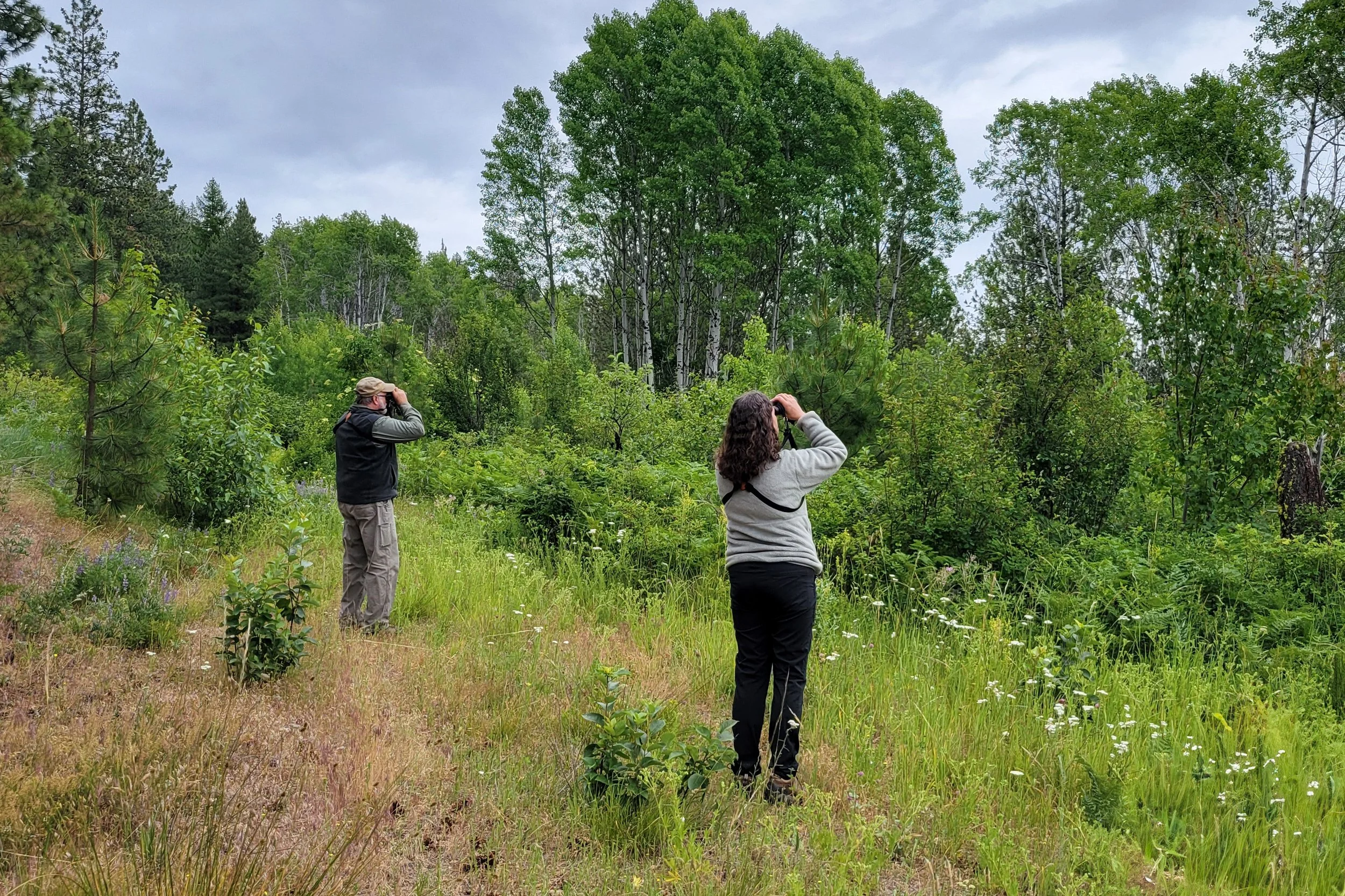
Dave Kreft and Shenandoah Marr spotting a bird. Photo by Erik Shelley.

Specific forest management on the wildlife area included commercial logging during the 1990s and more recently, thinning and prescribed fire. WDFW biologist Dana Base completed breeding bird surveys in 1998 to monitor habitat health. Other job duties precluded surveys in subsequent years, but his report provided the methodology for the Spokane Audubon partnership project.

Surveyors count all birds seen and heard at five selected points along each transect route. Six routes were developed in consultation with the wildlife area manager Daro Palmer and represent habitat diversity as well as treated and untreated areas. Two routes are counted annually so a full cycle will be completed over three years. Points counts collect useful information for monitoring population trends but are less suitable for determining species diversity. To assist with understanding what birds reside on the wildlife area, surveyors also record, but don’t count, species identified between points.
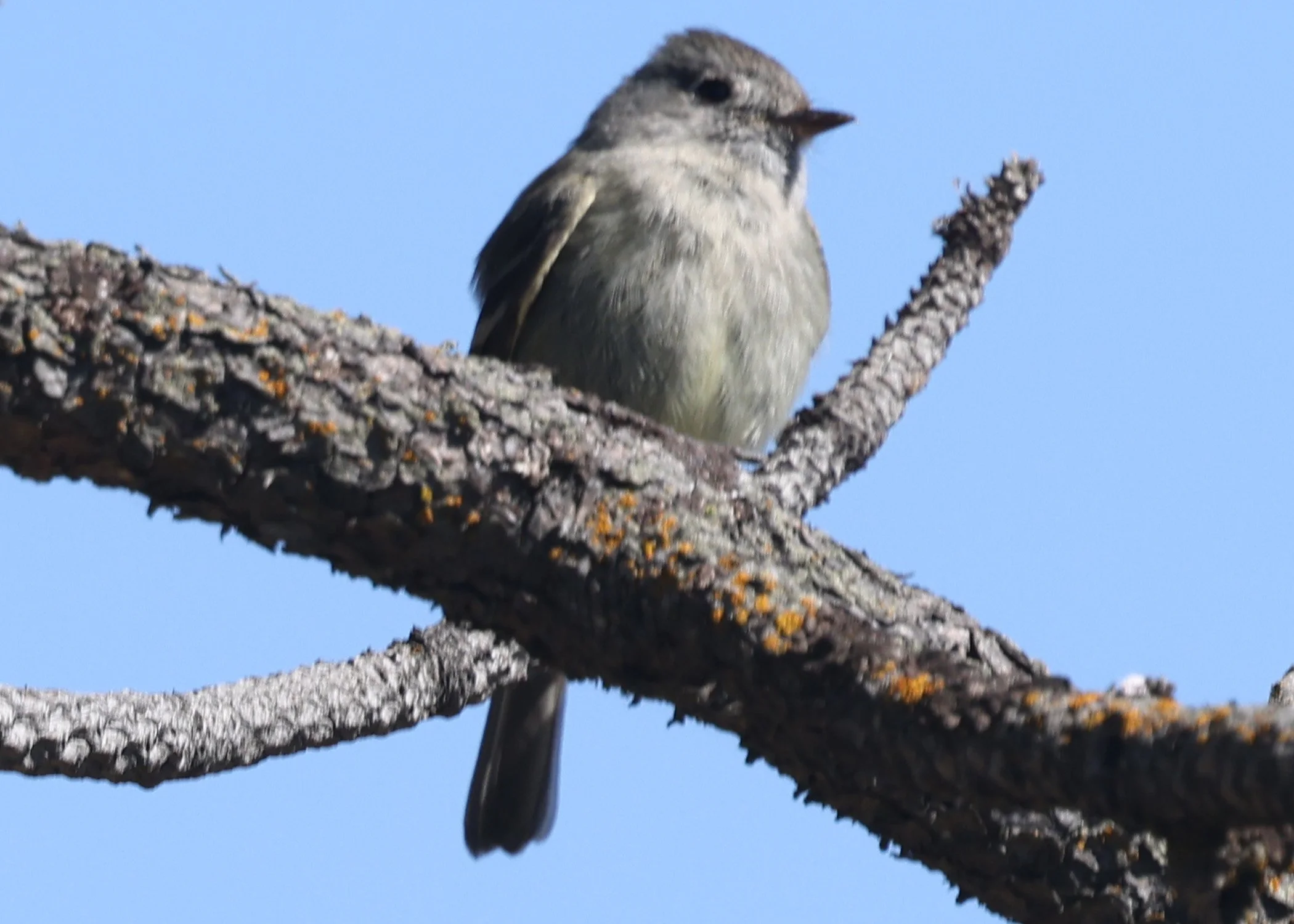
Hammonds Flycatcher photo by Kim Thorburn

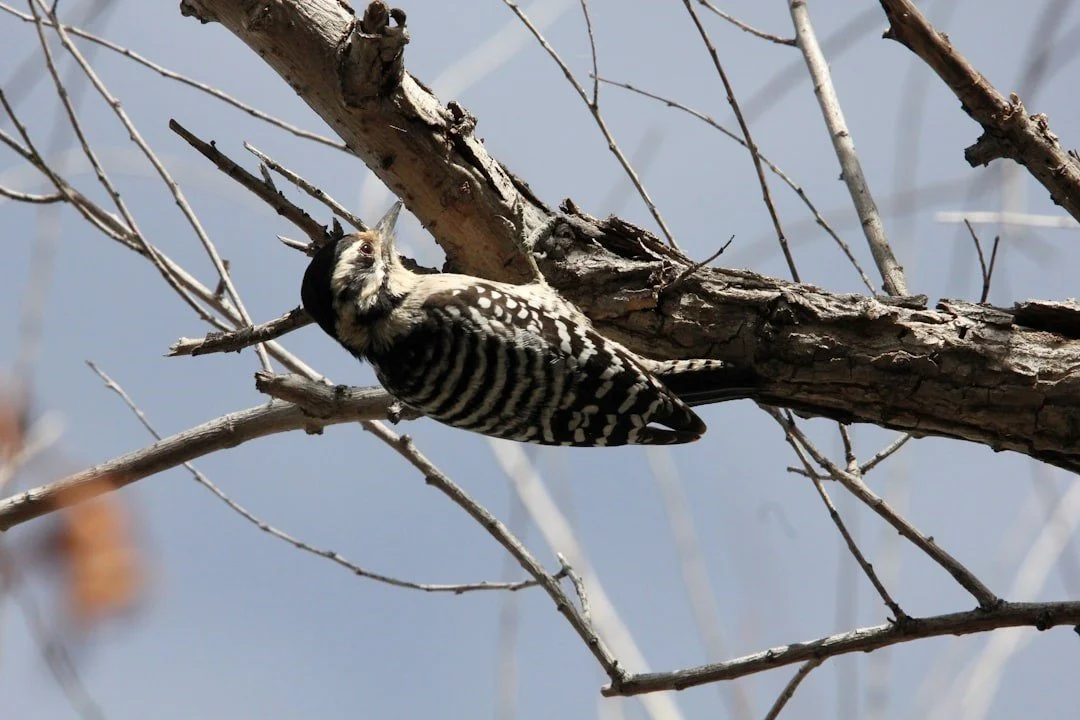
Routes 1 and 2, surveyed during the project’s first year in 2024, are low elevation Ponderosa pine habitat. This forest type supports several of the state’s bird species of greatest conservation need, including flammulated owl (Otus flammeolus), white-headed (Picoides albolarvatus) and Lewis’s woodpeckers (Melanerpes lewis), pygmy nuthatch (Sitta pygmaea) , and western bluebird (Sialia mexicana). White-headed woodpecker, pygmy nuthatch, and western bluebird were documented during the 2024 surveys in addition to healthy abundance and diversity of the habitat’s bird life.

In 2025, routes 3 and 4 were surveyed covering a distinct higher elevation mixed conifer habitat including larch, Douglas-fir, and some western white pine. Bird species counted reflected the change in habitat, such as Hammond’s flycatcher (Empidonax hammondii) replacing western (Empidonax difficilis) at higher elevations, Swainson’s thrush (Catharus ustulatus) predominating veery (Catharus fuscescens), and increased abundance of forest warblers. The habitat does not hold species of critical conservation status, but the diversity and abundance of birds identified by the surveyors demonstrated well managed, healthy habitat.

The full route cycle (routes 5 and 6) will be completed in 2026 with subsequent years monitoring bird population trends as we begin to repeat previously counted routes. We are very grateful to the volunteer surveyors who are the mainstay of the project. In addition to contributing important data to conservation work, participation in the Sherman Creek Wildlife Area Conservation partnership is an opportunity to practice survey skills in a beautiful breeding bird landscape.
Kestrel Nest Box Program Update


Volunteers Needed For Next Season

By Mike Borysewicz

In the winter of 2025, Spokane Audubon procured a $1,000 National Audubon Society Collaborative Grant to expand the chapter’s kestrel nest box program. We used the grant money to purchase materials and supplies to construct 30 nest boxes, adding to the ten we already had in place from last year.

We partnered with Eastern State Hospital, WA Department of Natural Resources, USDI Bureau of Land Management, Hutton Settlement, and nine private landowners to install boxes on their properties in western Spokane County.

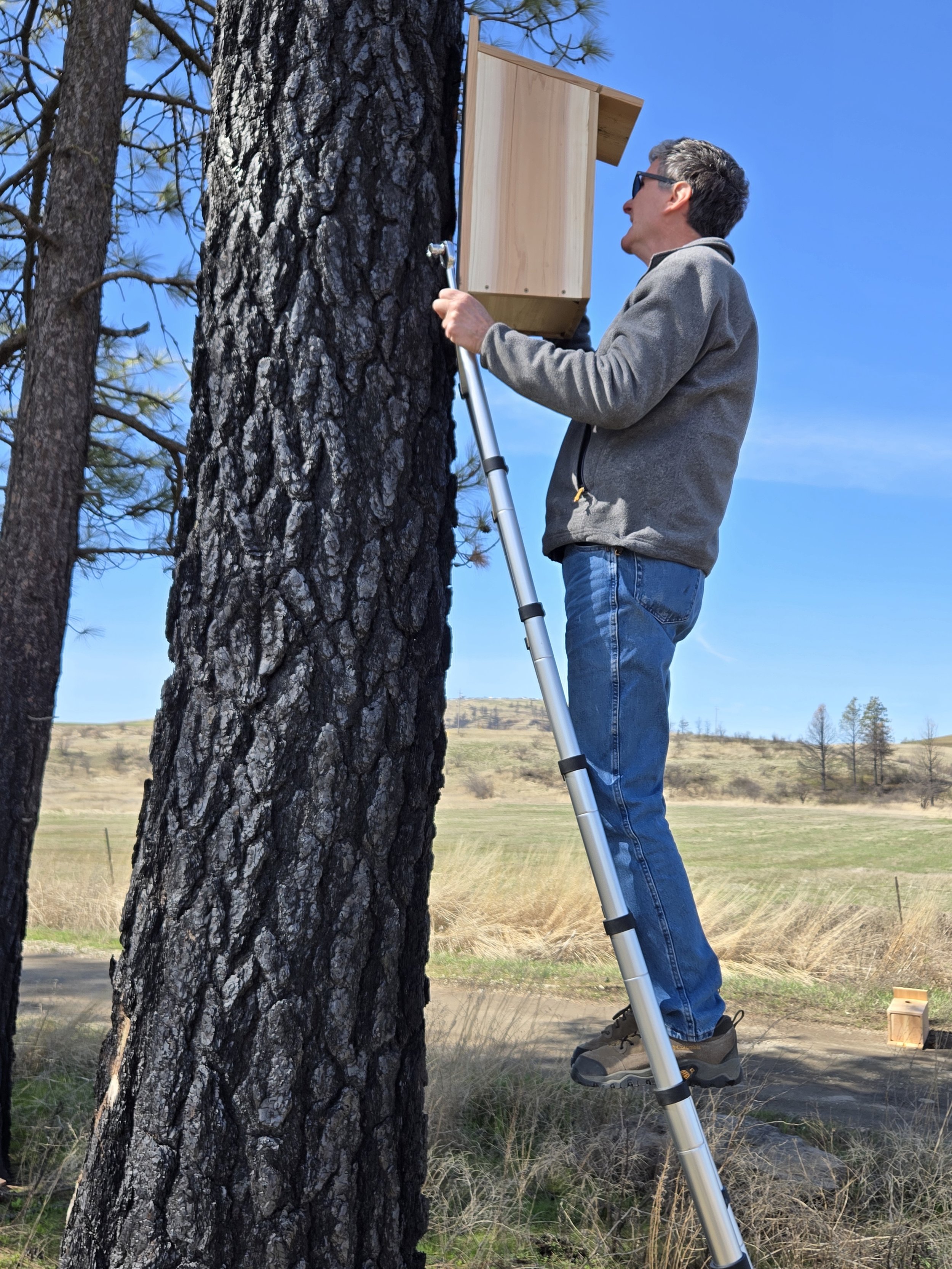
Mike Borysewicz installing a brand new kestrel nest box

Of the 40 total boxes now in the program, four were occupied by the target species in 2025. Three of these were successful, producing a total of 10 kestrel fledglings. A female kestrel laid eggs in the fourth box, but these became non-viable after starlings removed all the wood chip nesting substrate from the box. Three separate boxes were occupied by other native bird species (tree swallows and northern flickers).

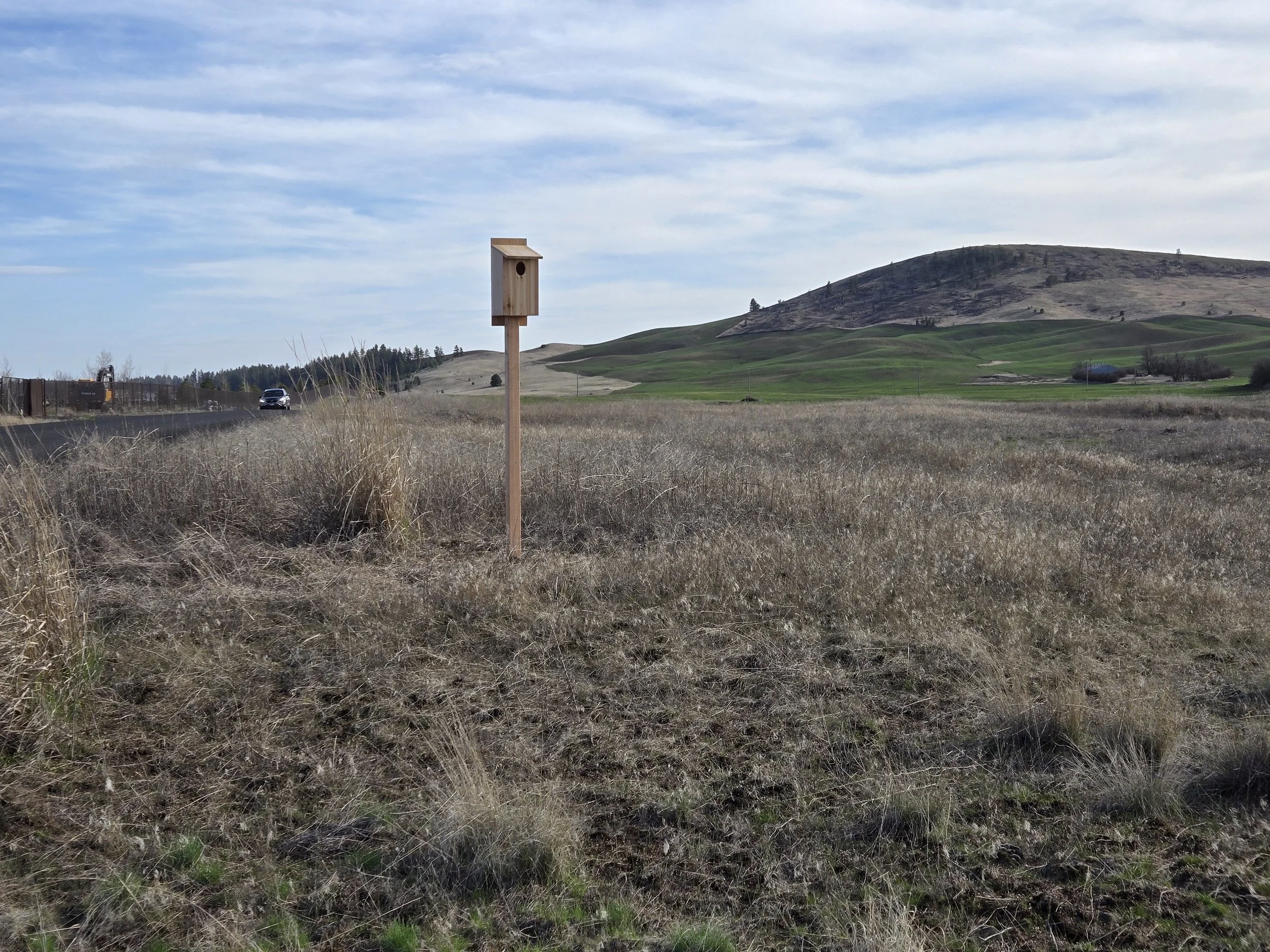
Open country is the best location for a kestrel nest box.

It can sometimes take more than one season for a nesting pair of kestrels to find and decide to occupy a box, so we are hopeful that the success rate of the program will increase this coming nesting season.

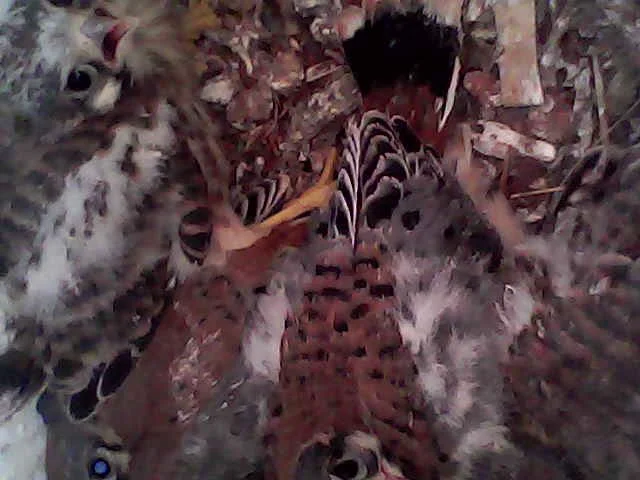
This jumble of feathers is a clutch of 4 nestling kestrels.

We would like to add to the number of boxes in the program this winter. If you have woodworking skills, shop tools (table / skill saw, drill, hand tools) and an interest in contributing to the conservation of these beautiful little falcons, we could use you! We will supply the nest box plans, and materials for box construction. We can also use another volunteer or two to monitor nest boxes. If you are interested, please contact program chair Mike Borysewicz.


Youth Project: Black-capped Chickadee

Our Outreach Coordinator Shenandoah Marr responded to a request from a nine-year-old girl for a volunteer project on birds with the suggestion to research a species she likes and write a report. Here’s what came back:

Black-capped Chickadee
By Serenity Shaeffer

What I like:
It’s a really cute tiny bird and it’s fluffy and makes a cute sound.
What I learned:
They have a bird friend for life most of the time.
They live 2 to 3 years, sometimes 5 to 10.
Oldest one was 12 years and 5 months.
They constantly watch for predators, and they make a cool alarm sound if they see one that warns other birds and even squirrels.
In the winter they sleep in trees or under houses so they can be warm and dry.
They eat seeds and berries, they love black oil sunflower seeds.
Usually when they come out of small tree spots they can have a bent tail because they squished themselves in.
They are not a finch .

Save-A-Bird team encounters Great Blue Heron pair nesting In Manito Park

By Joyce Alonso

Herons in a city park?!

Bird lovers everywhere are intrigued by avian life cycles, courting habits, but especially by their efforts to reproduce and continue their species. We are charmed by the tiny nests of hummingbirds, impressed by the orioles’ weaving skill…but what of the larger birds?

This spring a pair of Great Blue Herons set out to create a family. Where to build a nest? Location, location, location! Humans who frequent Manito Park were surprised to see a pair at work 50 feet up in a towering ponderosa pine on the west end of Mirror Pond. In about a month’s time the shallow platform nest held five chicks, which the parents provisioned with fish from the handy pond below. Rejected and dropped fish and parts littered the grass below.

Despite parental efforts, all was not well in the Great Blue nest. Two of the five young fell or were pushed from the nest, suffering broken legs in the fall. Great Blue Heron chicks may accidentally fall from the nest as they move around, grow, and develop their wings. Additionally, if they are not getting enough food or if there is overcrowding in the nest, some chicks may be pushed out by their siblings.

A member of the public found one of the heron chicks dead on the ground below the nest. Spokane Audubon’s Save-A-Bird Team was notified of the plight of the second bird on the ground, and a team member arrived to find it in poor condition, too thin and too weak to stand or to offer much resistance to being handled. This bird was transported to the Wildlife Ward of Washington State University’s Veterinary Clinic in Pullman, where the veterinarian determined it had severe injuries that would prevent it from being able to survive in the wild. Sadly, the bird had to be euthanized.

The Washington Department of Fish and Wildlife’s Eastern Region office in Spokane Valley forwards requests for help from citizens who find birds in distress, to the Save-a-Bird team. Team volunteers monitor a dedicated email account and respond to these inquiries. They may simply provide advice to the reporting party, or they may physically capture and transport a bird to a partnering local veterinarian for stabilizing treatment or humane euthanasia. Sometimes this may mean a long drive to WSU’s Wildlife Ward in Pullman.

As of this writing, the other heron nestlings at Manito Park remain high up in the tree, their nest having disintegrated on one of our recent blustery days. Members of the Save-A-Bird team have been visiting the park periodically to check on them. Their future…?? Fingers crossed…maybe toes too!

If you would like to volunteer with the Save-A-Bird team, use this link to go to the volunteer page on our website: https://www.audubonspokane.org/volunteer. A team member will contact you as soon as possible. Training and mentoring are available.

Notes from a Beginning Birder, Part 3. Carpe Diem! Birding and Hiking, what a Nice Reprieve!

Notes from a Beginning Birder, Part 3. Carpe Diem! Birding and Hiking, what a Nice Reprieve!

I have been working hard at taking action, but with all that is happening in the world, it often feels like I am throwing pebbles into the ocean trying to make the water rise.

I am reminding myself that I can throw pebbles, laugh, sing, and play -- all at the same time.

Please enjoy reading about some of my funny adventures that led to mini-lessons on a recent trip to Arizona.

Notes from a Beginning Birder: Chasing False Idols through the Woods

Notes from a Beginning Birder: Chasing False Idols through the Woods

Notes from a Beginning Birder: Chasing False Idols through the Woods

I was looking and listening for birds as I walked on a trail through a small patch of woods near my parents' assisted living facility. But every time I heard a bird call, their song would be drowned out by the thunderous rumbling of an overhead plane, the whirling, and whooshing of a car, or the banging of a hammer and grinding of a saw from a nearby construction site. While I knew there were birds in these trees, I was unlikely to hear them.

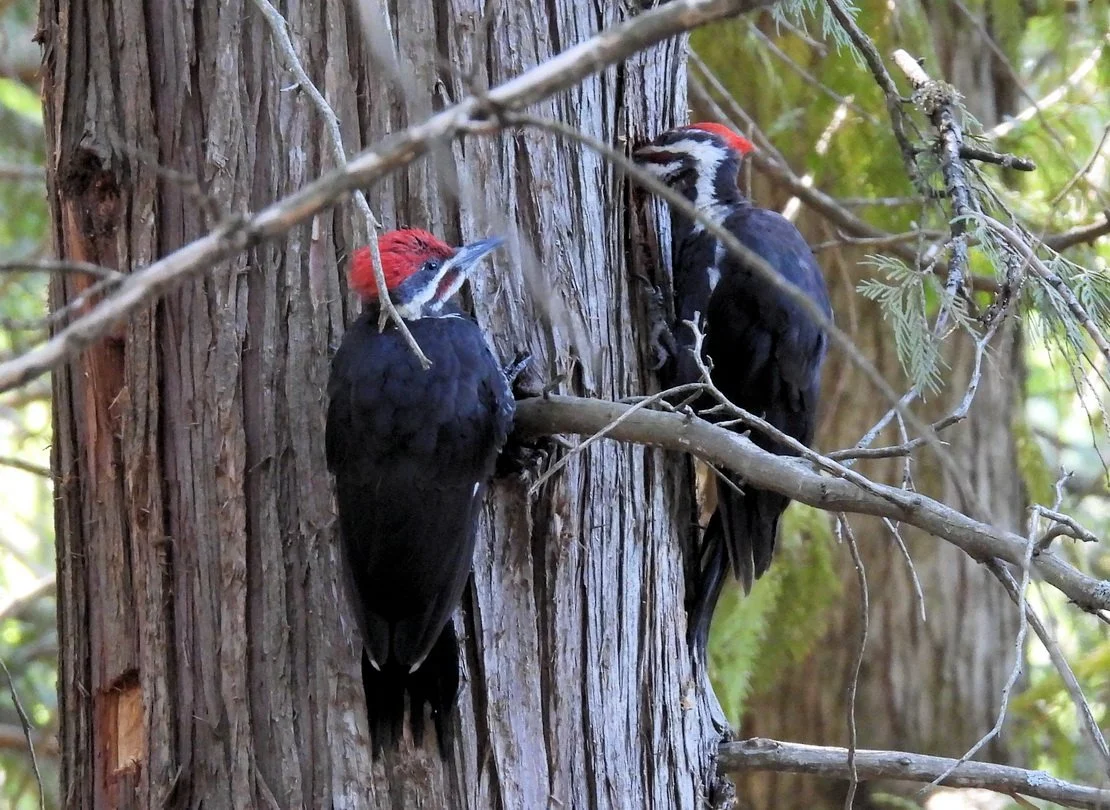
Then, much to my delight, perhaps only thirty feet in front of me, I spotted a pileated woodpecker perched on an old cedar tree. I couldn't believe my luck -- I was in a noisy city and seeing this beautiful woodpecker for the first time.

Goal for over the holidays: Waste less food

Goal for over the holidays: Waste less food

Goal for over the holidays: Waste less food
by Liz Melville

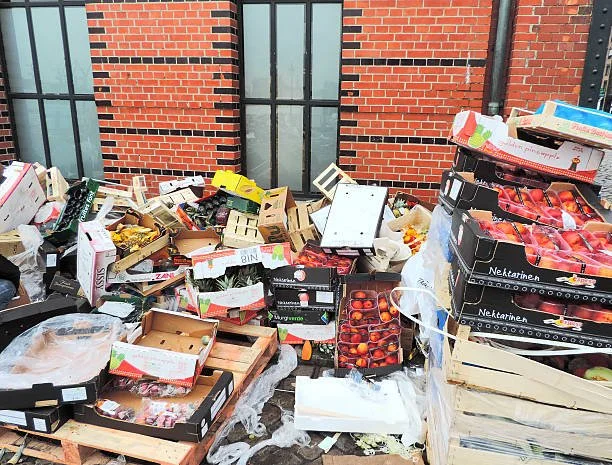
Who wouldn't want a tidy, clean kitchen and an organized refrigerator? Who wouldn't want a plan for shopping, cooking, and meals? Who wouldn't want to avoid food waste?

These seem like simple, easy accomplishable goals. But for me, they are hard. I have had issues with organization and clutter for as long as I can remember. The back corners of my refrigerator often contain green, slimy things and odd items bought for special recipes. I save what I don’t want to eat until it is no longer edible and then throw it away.

Bird-Friendly Maple Products are Sweet!

Bird-Friendly Maple Products are Sweet!

Once I made sure my pantry would always be stocked with bird-friendly coffee I turned my attention to other bird-friendly food products.  Along with wildlife, food and cooking are favorite interests of mine so why not continue my obsession with bringing bird friendly products into my kitchen?  Turn to bird-friendly maple syrup and other maple products.  Having spent my whole life on the West coast I’d never given much thought to where maple syrup comes from other than observing that the Canadian flag has a maple leaf on it. 

This Coffee is For the Birds

This Coffee is For the Birds

It started with my morning coffee. Following a recent discussion with a friend about how we would never let our money support deforestation, I started thinking more about what products actually do come from the rainforest. Growing up in California in the late 80’s I spent my adolescent years hearing about the destruction of the Amazon, begging my mom to buy Ben and Jerry’s Rainforest Crunch ice cream, and wishing I lived closer to a trendy new Rainforest Café. I thought I was an expert on rainforest preservation matters. I never purchased products sourced from endangered species, and quit eating McDonalds in high school after learning they were cutting down the rainforest to raise cattle. Surely not a cent of my money ever supported the destruction of the Amazon or any other rainforest. Or did it?