I was out to Turnbull one lovely blue sky day in mid-October in hopes of seeing how the two Trumpeter Swan families were doing.
At Kepple Lake, I observed the single cygnet scooting rapidly along in the water by exercising its wings ("scuttling" they call it), and happened to notice that its flight feathers looked filled in, so it would be only a matter of days before it could fly. The parents will migrate with this cygnet and stay together as a family over the winter. And I’m sure the cygnet still has a lot to learn from them, including the migration route and key food resources.
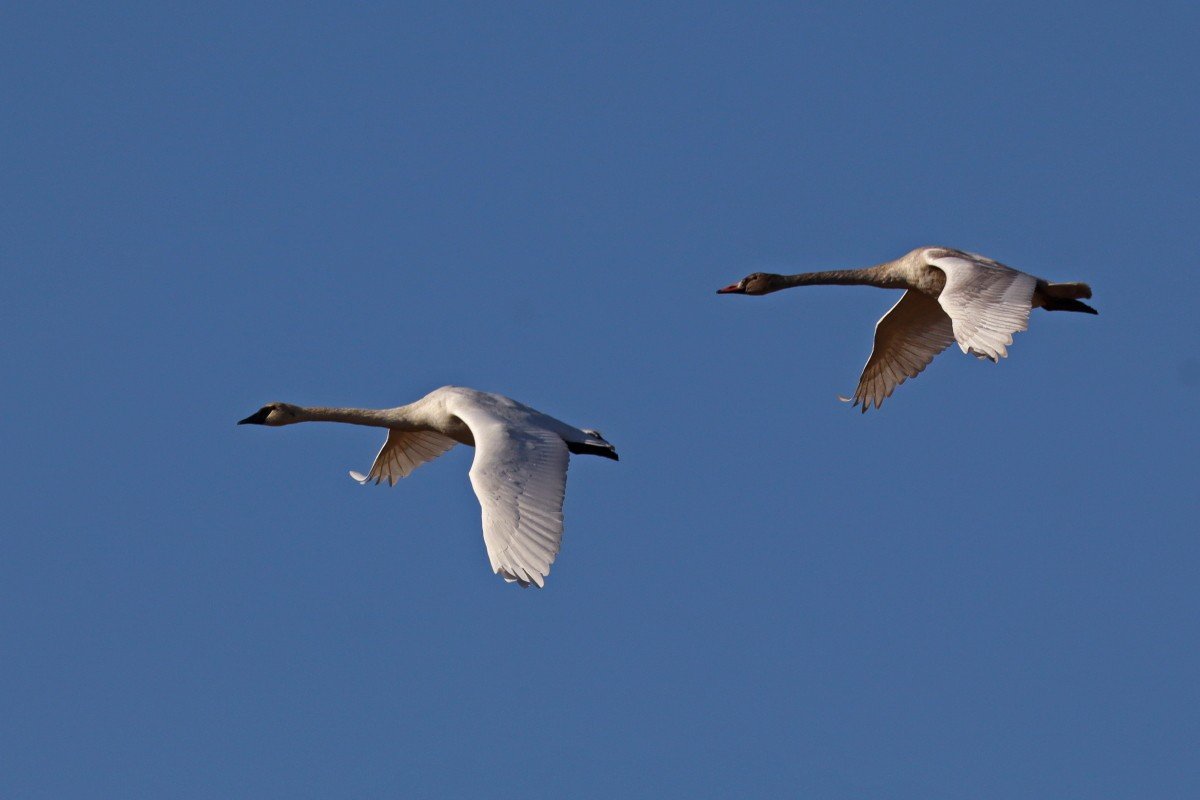
Later on, I parked and walked along the Pine Lake Loop and it was fun to watch the swan air show! The six of them from Cheever Lake circled around Pine Lake and directly over me a couple of times before they headed back to Cheever where they landed. What a magnificent sight! Later, when I reviewed my pictures, I noticed that one of the cygnets had some feathers missing in one of its wings but it did not hinder it from flying. I do wonder what happened... This swan family group did a lot of synchronized flying. It sure looked coordinated!
When they return next year, the cygnets' plumage will be whiter and perhaps they will stay with the parents until the next nest is built. The parents will then make space and resources for their next clutch by encouraging their young swans to find their own territory. And after leaving their parents, the juvenile swans might remain as a sibling group until they are about two years old before finding their own mates.
Both the Kepple and Cheever swan families might still be somewhere on the refuge, but I haven’t seen them since I took these photos. Hopefully, I will get to see them before they migrate once ice begins to cover their food and water sources, which usually happens after Thanksgiving. These swans will at least go south or west to the nearest ice-free lake or wetland, but hopefully they will return to the refuge as soon as the ice melts in the spring.
Have a good day!
Carlene


